TECHNICAL GUIDE / 2026-10-16
94% or 95% Brown Fused Alumina for Resin Cutting Discs? A Qualification Walkthrough
Every resin cutting-disc maker eventually faces the same purchasing decision. The volume product — a thin disc, typically in the 1.0 to 1.6 mm class, running in the F36–F60 grain band — needs a workhorse brown fused alumina, and two grades are on the table: 94% and 95% Al₂O₃. On a price list the difference looks like one percentage point of alumina and a step in cost. On the production floor the real difference is consistency, and consistency is hard to evaluate from a data sheet. This walkthrough sets out how a typical cutting-disc maker can qualify both grades properly: what actually differs between them, what to inspect and record during a trial, and a decision rule for choosing one — or running both.
What Actually Differs Between the Two Grades
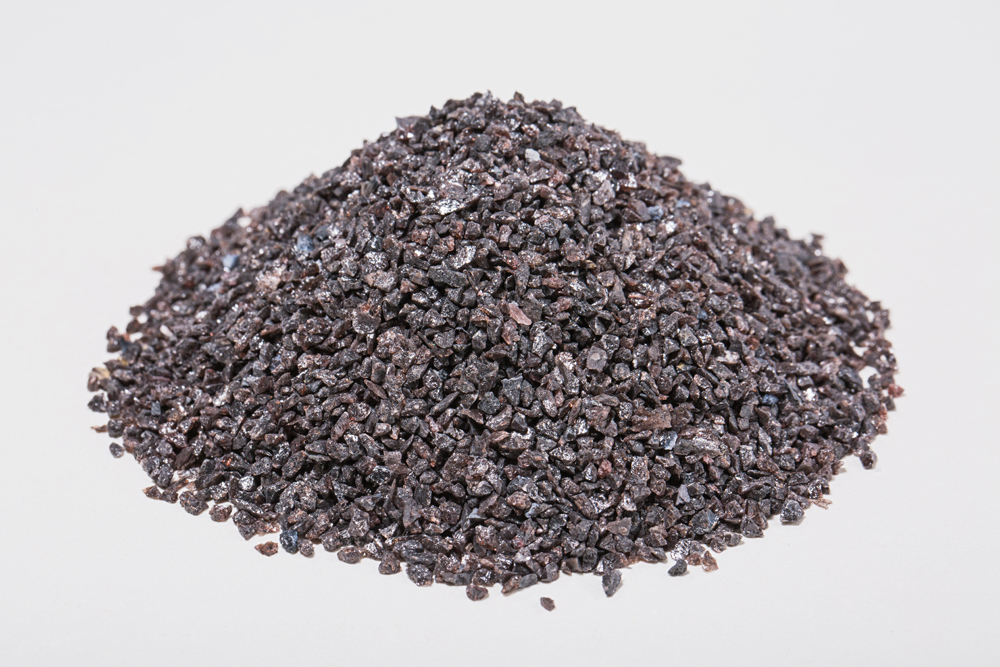
The 95% grade is smelted in tilting furnaces. The tilting furnace gives the melt more complete fusion and controlled cooling, and the practical result is the tightest batch-to-batch consistency we produce: chemistry and grain character stay in a narrow window from lot to lot. The 94% grade comes from fixed furnaces and is the mainstream value grade — fully capable material for standard disc production, with a wider natural variation band and a lower cost position.
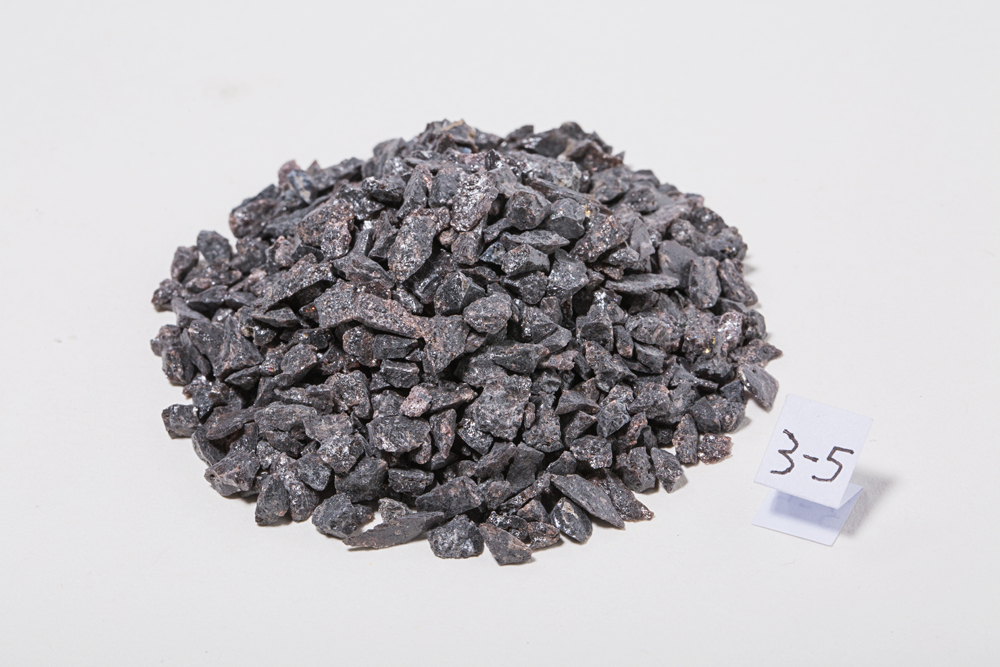
Two cautions before any comparison starts. First, neither grade should be bought on a headline number quoted in an article or a brochure. The values that bind a delivery are the ones written into the agreed specification sheet and proven, batch by batch, in the batch test report; if a limit matters to your process, it belongs in that document, not in a sales conversation. Second, both grades are available in the same disc sizes, so grit selection and grade selection are separate decisions — settle the size first (our guide to grit size for metal cutting discs covers the thickness logic), then qualify the grade at that fixed size.
Step 1: Freeze Everything Except the Grain
A grade trial only proves something if the grain is the only variable. Use the same disc specification, the same resin and reinforcement, the same mix ratios, pressing parameters and curing cycle for both candidates, and run the trials close together in time so machine condition and operator do not drift between them. Makers who change the resin at the same time as the grain learn nothing — when the trial disc behaves differently, nobody knows which change caused it.
Step 2: Run the Same Incoming Inspection on Both Lots
Before either lot reaches the mixer, put both through the incoming inspection you would apply to a production delivery, and file the results side by side:
- Batch chemistry — read the batch test report against every limit in the agreed specification, not just the alumina headline.
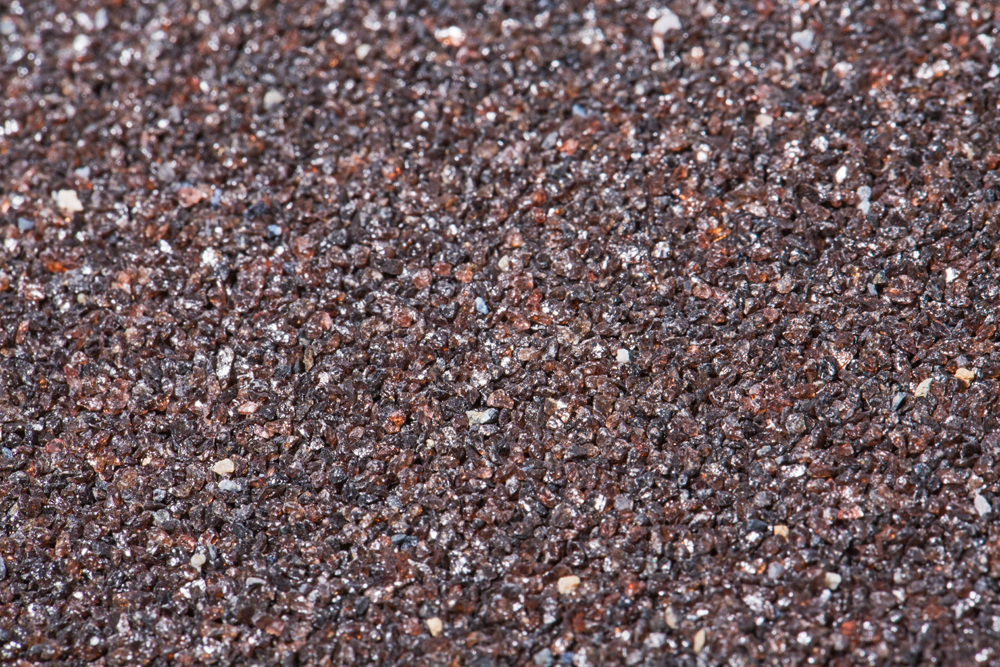
- Particle size distribution — sieve the sample against the F-grit distribution in the specification and note how much sits on each key sieve, especially any drift toward the coarse or fine edge.
- Magnetic content — check the reported value; excess magnetic material is an early warning of separation problems upstream.
- Handling behaviour — note moisture condition and flow in your own storage and dosing equipment, the same way your operators will meet the material every day.
The point of the exercise is not to find a winner on paper. It is to establish the baseline each grade must match when production lots start arriving.
Step 3: Press Trial Batches and Watch the Process
Press a trial batch of discs from each lot under production conditions and record what the process tells you: how the mix wets out and fills the mould, how the pressed discs handle before curing, and whether curing behaviour stays inside your normal window. These are observation items, not pass/fail numbers — write down what the operators actually saw, in their own terms, on one record sheet per grade. A grain that cuts well but makes the mix difficult to dose is a production cost, and it belongs in the decision.
Step 4: Cut Under One Fixed Method — and Record Everything
The cutting trial needs one workpiece, one machine setting and one recording method, fixed in advance and identical for both grades:
- Cutting speed — time each cut on the same standard workpiece section, and compare the average across a fixed number of consecutive cuts, noting how the time trends as the disc works.
- Disc consumption — measure the disc diameter before the trial and after the same number of cuts, so wear is expressed as diameter loss per identical workload; alternatively, count the cuts each disc completes to your normal discard point.
- Breakage and failure events — count every disc that breaks, sheds segments or has to be pulled early across the whole trial batch, and note where in its life the failure happened.
- Cut quality — inspect the cut edges for burr and burn discolouration on the workpiece, and record the findings per grade rather than relying on memory.
Write the method down before the first cut. A trial whose method was improvised produces opinions; a trial with a fixed method produces evidence the purchasing decision can stand on.
Step 5: If You Can, Trial a Second Lot
One lot proves one lot. The property the 95% grade charges for is repeatability across lots, and that can only be observed across more than one delivery. If volumes justify it, qualify both grades on two lots before deciding — the second-lot comparison is usually where the real difference between a tilting-furnace grade and a value grade becomes visible.
The Decision Rule
Choose the 95% grade when your discs are sold into customers with formal incoming inspection or audit requirements, when your product is a premium thin disc whose selling point is stable performance, or when the cost of a field complaint is high relative to the grain cost saving. What you are buying is a narrower variation window.
Choose the 94% grade when the product is a general-purpose disc competing mainly on price, your process is stable and well understood, and your own acceptance criteria are the ones that matter. For a large share of standard disc production this is the economically correct answer.
Or run both. Many makers split the range rather than choose: the premium line runs on 95%, the volume line on 94%. That works well provided the two specifications are kept separate in purchasing and storage, and neither is silently substituted for the other during a shortage.
Start With Samples of Both
The honest way to settle this question is in your own plant, on your own discs. Send us the grade you are comparing, the grit size, the quantity you are considering, the packing you need and your destination port, and Luoyang Naibao New Materials Co., Ltd. will quote against that specification — and supply evaluation samples of both the 94% and the 95% grade, in the same grit size, so your qualification trial compares like with like. The full range behind both grades is in our F grit series.