TECHNICAL GUIDE / 2026-10-02
Short answer. Choose the abrasive belt as a system. Backing type and flexibility, coating construction, P grit size and workpiece conditions interact. Specify the full P designation and test the belt's cut, finish, flex and wear on the intended process rather than choosing a grain grade from a backing name alone.
Begin with the belt duty
An industrial belt may run on a contact wheel for stock removal, on a platen for finishing, or through a flexible contouring operation. Those duties place different demands on the backing and abrasive layer. State the work material, contact geometry, pressure, belt speed, desired cut and finish, and whether the belt must flex around a small radius. A request for brown fused alumina P grit without this context leaves the converter to guess which belt construction is being qualified.
Backing choices are not interchangeable labels. Paper, cloth and other constructions differ in strength, flexibility and behavior under moisture or heat, but actual products also vary within each family. The converter should use its own backing specification rather than assuming a generic ranking. A grain that works on a stiff belt may behave differently when the backing flexes; a fine P grade does not by itself solve a backing crack or joint failure.
Keep the P designation and grade intent clear
FEPA P designations are used for coated abrasives. Include the prefix on RFQs, samples, PDS comparisons and manufacturing records. A bare number invites confusion with F grit used for bonded abrasives. The reference particle size is not an absolute diameter for every grain. The converter should work from the governing standard and the agreed distribution, especially if a supplier proposes a change near the boundary between coarse stock-removal and finer finish work.
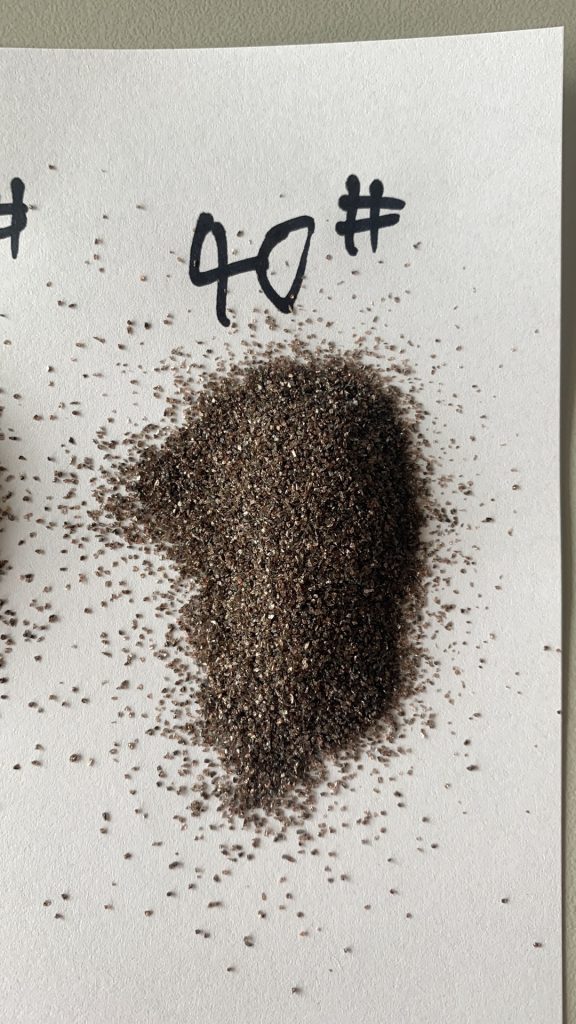
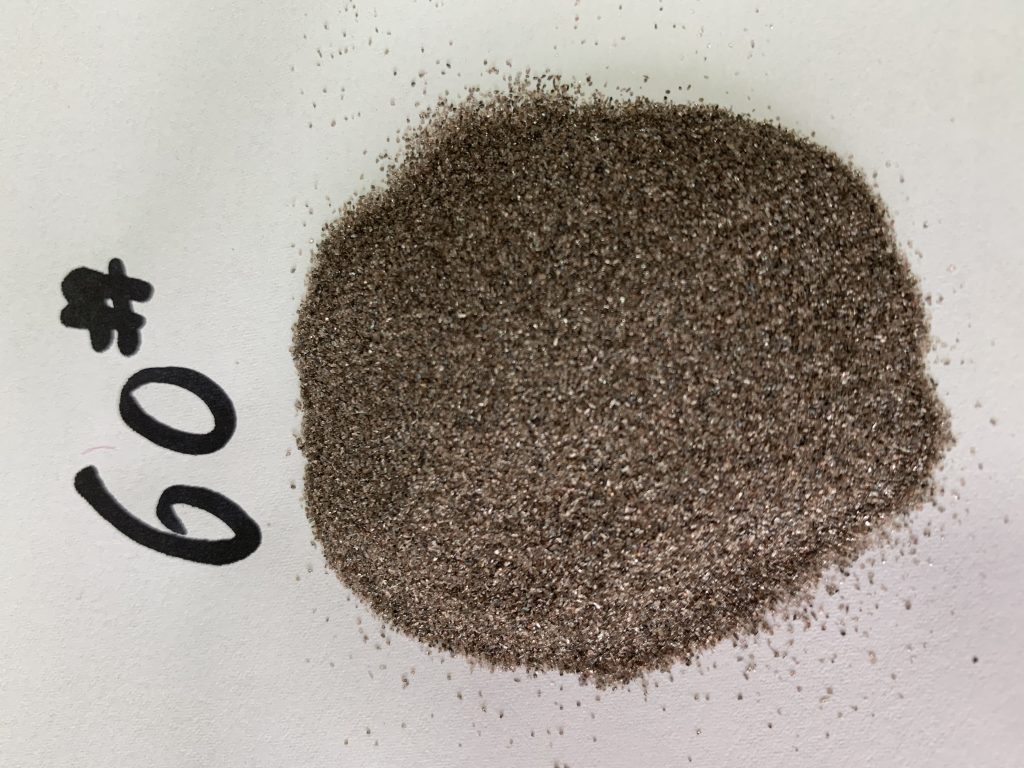
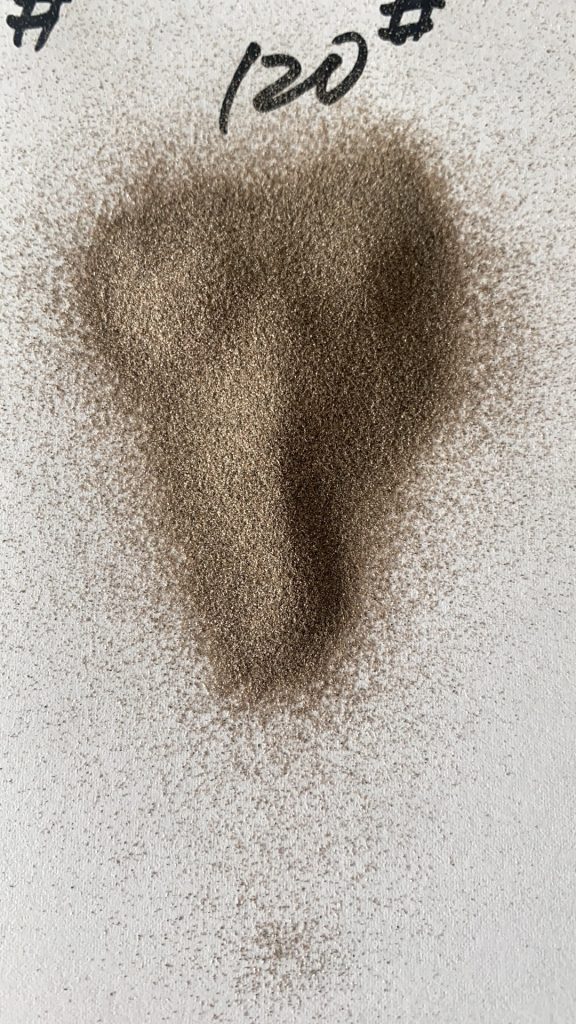
The target P grade should be chosen from a measured belt result. Coarser grades may be considered when the process prioritizes removal, while finer grades may help reach a different finish, but the result depends on the workpiece and belt construction. Do not promise a particular surface quality from P40, P60 or P120 by name. Use a small trial range and document the current accepted grade and why a change is being studied.
Match grain presentation to the backing
The make coat, grain application method and size coat determine how P grit is held on a particular backing. A flexible construction may place different stresses on the abrasive layer as the belt bends, while a rigid setup emphasizes other failure modes. Record grain loading and orientation, coating weights and cure schedule for each trial. If backing and grain both change, create a trial matrix that can distinguish their effects rather than comparing only a finished belt with the current product.
Inspect distribution across the web and after converting into belts. Grain concentration near the edges, joint area and contact zone can influence the observed result. Store trial rolls under the converter's approved conditions so a moisture or curl issue does not become a false grain conclusion. Preserve supplier lot and backing lot identifiers with each belt specimen; traceability matters when a later run performs differently.
Test cut, finish and durability together
Run baseline and candidate belts against the same work material and contact geometry, using the converter's safe operating limits. Record cut over time, surface finish, belt wear, grain shedding, loading and any backing or joint damage. A faster initial cut is not sufficient if the belt deteriorates quickly or fails a handling check. Likewise, a smooth finish achieved only with lower pressure may not satisfy a production cycle-time requirement.
Where the buyer uses a sequence of belts, evaluate the proposed grade in that sequence rather than in isolation. A roughing belt can leave scratches that a later belt must remove, and a finishing belt cannot compensate for an unsuitable prior step without extra time. Ask whether the backing is compatible with the machine's tension and tracking. These are finished-product decisions; CHAOYAN can document and supply the abrasive grain, while the converter qualifies the completed belt.
Selection guidance
Provide CHAOYAN the requested P grade, current abrasive product, backing type, coat route, work material and performance target. Request the matching PDS and a sample suitable for the converter's line trial. Review the abrasive-belt guide for the broad application and the P120-versus-P220 guide for finer-grade questions. Write the accepted grade, backing and process settings together in the controlled manufacturing specification. A change to one of them should trigger a review of the whole belt, not a silent substitution based on a familiar grit number.
Common mistakes
- Treating paper or cloth as a complete backing specification.
- Leaving the P prefix off a coated abrasive purchase order.
- Changing backing, coat and grit together without a comparison matrix.
- Approving a belt by initial cut while ignoring flex or grain retention.
Related technical guidance
Frequently asked questions
Can one P grit grade work on every belt backing?
No universal fit can be assumed. The converter must evaluate grain deposition, coating, flex and finished-belt performance on each relevant construction.
Is a finer P number always the better finishing choice?
The number alone is insufficient. Consider the prior abrasive step, work material, pressure and the measured finish and production rate.