TECHNICAL GUIDE / 2026-10-02
Short answer. Adhesion in an abrasive belt belongs to the completed coated product. Confirm the supplied P grit designation and lot, then hold backing, adhesive coats, grain application and cure conditions under a controlled trial. Measure grain retention and belt performance by the converter's accepted method; a raw-grain hardness or chemistry row is not an adhesion guarantee.
Identify the actual adhesion problem
A coated abrasive converter may describe grain shedding, uneven coat coverage, premature belt failure or a change in cut as an adhesion problem. These symptoms do not all point to the incoming brown fused alumina. Define when the issue appears: during coating, after cure, at belt converting, or during use. Record whether it affects one backing, one production lane or several grain lots. That timeline determines which controls belong in the first investigation.
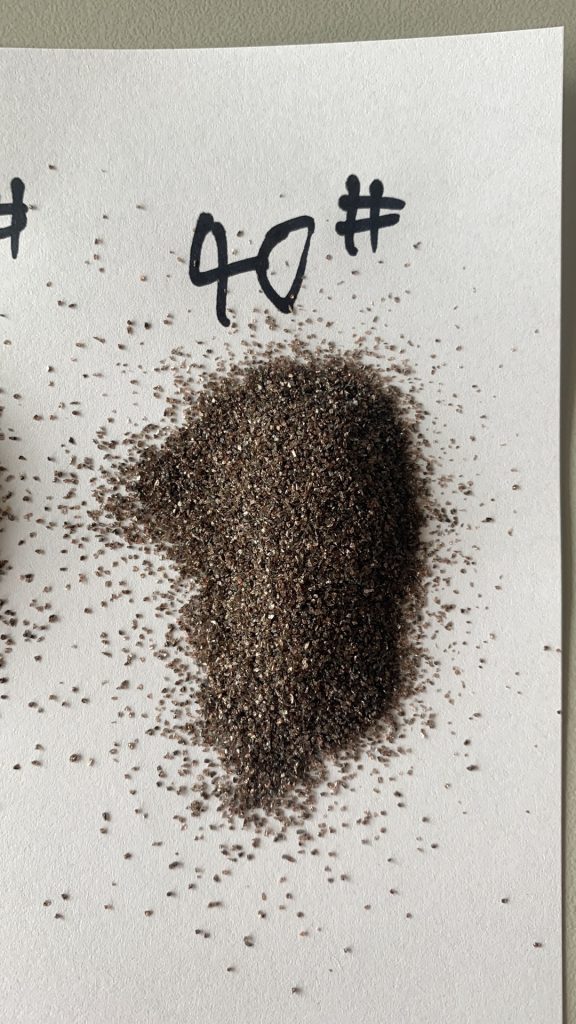
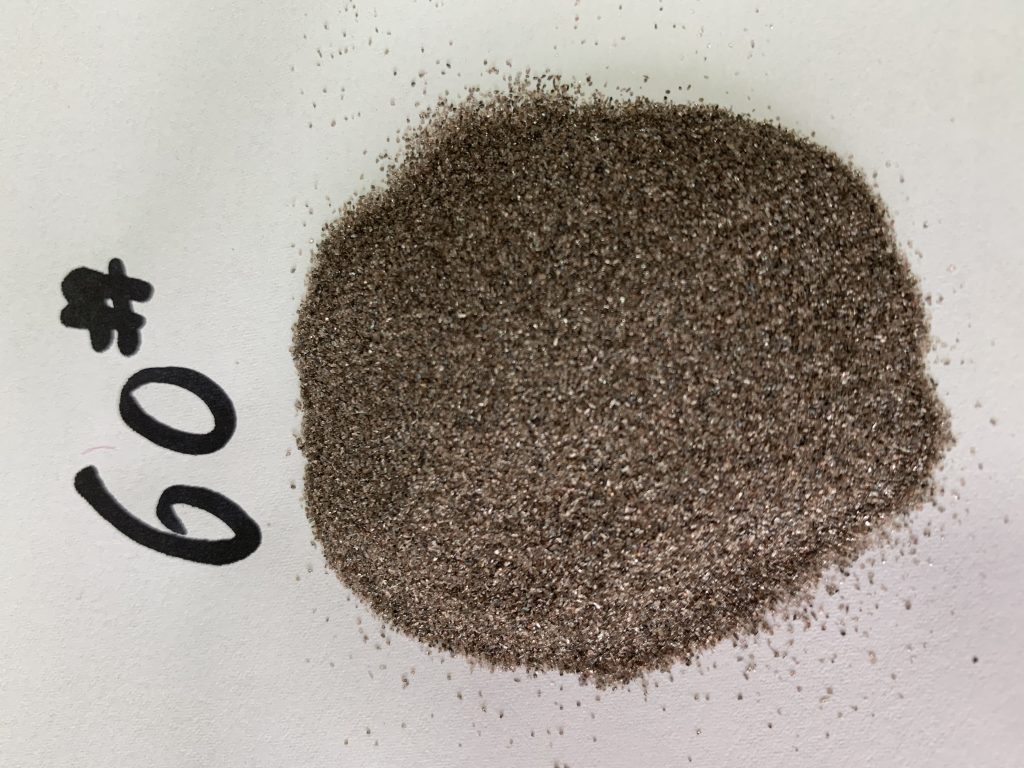
Before comparing suppliers, retain the accepted belt as a control. Document its P grit, backing, make coat, grain application route, size coat and cure schedule. A request for P60 should include the P prefix; F60 is not an interchangeable coated-abrasive designation. Note whether the proposed grain differs in particle distribution, shape or treatment from the control. If several features change together, plan a staged test instead of calling the result a simple supplier comparison.
Check grain identity and condition
Use the exact product sheet and agreed batch limits for the P grade. Sample the supplied lot under the converter's plan, checking distribution, relevant chemistry, shape and handling condition where specified. Moisture exposure or contamination during storage can affect how a grain moves through the application equipment, even if the label is correct. Keep a retained sample and link it to the coating run. Do not infer an adhesion result from the public PDS alone.
If the grain is electrostatically oriented, record the orientation setup and observed deposition pattern. A change in particle shape or size distribution may alter how the grains present to the make coat. Separate a feed problem from a bond problem: the converter should first verify that the intended amount and orientation of grain reached the backing. A later retention test on a poorly deposited coat would not fairly compare the material candidates.
Keep coating variables under control
The backing surface, make-coat viscosity and application weight, grain feed, size-coat coverage and cure cycle are all part of retention. Use the converter's approved process settings and record actual run values. If the new grain requires a different coating weight, perform a baseline run first and then an adjusted run. Do not quietly change coat formulation and grain source in one comparison; a favorable result would be difficult to reproduce or explain.
Inspect representative locations across the web, including edges and areas where deposition may vary. Record coat weight and grain loading under the plant's methods. A sample cut from one favorable strip can hide cross-web nonuniformity. Track the coated roll to its converted belts; a defect introduced during slitting, joining or storage should not be assigned to the incoming grain without evidence.
Test the finished belt
After cure and converting, use the accepted grain-retention and flex or handling checks for the belt type. Then evaluate cut, finish, belt wear and grain loss on the intended work material under controlled operating conditions. The converter should define the minimum safety and quality gates before looking at a headline cut-rate result. A belt that cuts aggressively but loses grain or fails at the joint is not a qualified substitute.
Repeat the trial enough to see production variation, not only a laboratory sample. Compare at the same belt speed, pressure, workpiece and endpoint. Document whether failure consists of grain fracture, grain pull-out or coat/backing damage. Those distinctions guide the next test. Include a retained finished-belt specimen with the run record so later complaints can be compared with the approved construction. The supplier can review the supplied P grit data; the converter owns the coating design and finished-belt acceptance decision.
Selection guidance
When sending an inquiry to CHAOYAN, provide the P grit, current grain characteristics, backing, coating route and the specific observed defect. Request a product PDS and sample sized for a controlled line trial. The P40-versus-P60 guide covers grade selection; this article covers retention after deposition and cure. Approve the new grain only after incoming material, process stability and finished-belt results agree. If the process must be adjusted, record the approved new settings as part of the qualification, not as an undocumented workaround.
Common mistakes
- Using F grit documentation for a P grit coated-abrasive trial.
- Calling poor deposition or a backing defect a grain adhesion failure.
- Changing make-coat weight and grain supplier without separate controls.
- Judging the entire web from one favorable belt specimen.
Related technical guidance
Frequently asked questions
Does a higher-purity abrasive automatically adhere better to a belt?
No. Adhesion depends on grain presentation, backing, coats and cure. Qualify the actual finished belt under the converter's method.
What evidence should accompany a grain-shedding complaint?
Keep the grain lot, coating run record, backing and coat details, sample location and failed-belt observations. These help locate the failure before changing material.