TECHNICAL GUIDE / 2026-10-02
Short answer. P120 and P220 are separate coated abrasive grain models. A finer nominal designation may be a useful candidate for a different finishing stage, but the accepted choice depends on the P distribution, coating construction and finished paper or belt trial under the buyer's process.
Locate the grade in the product's workflow
Coated abrasives are often used in more than one step on the same workpiece. A buyer comparing P120 and P220 should identify whether the product is a belt, paper, cloth or another coated form, and what the current stage is expected to accomplish. Define the work material, previous operation, target surface and inspection method. Without that context, moving to a finer nominal number can improve one observation while failing the required removal or production rate.
Describe the present construction: backing, make coat, size coat, abrasive loading and conversion. If this is a supplier substitution, retain the existing P grade and construction for the first comparison. If it is a grade change, hold the other factors stable and document any necessary coating adjustment separately. This distinction prevents a favorable finish from being assigned to grain size when the backing or coat was also changed.
| Question | Record before trial |
|---|---|
| Finished form | Belt, paper, cloth or flap product |
| Stage | Previous and target operation |
| Surface target | Named finish or acceptance method |
| Construction | Backing and coating route |
Check P120 and P220 as distinct material records
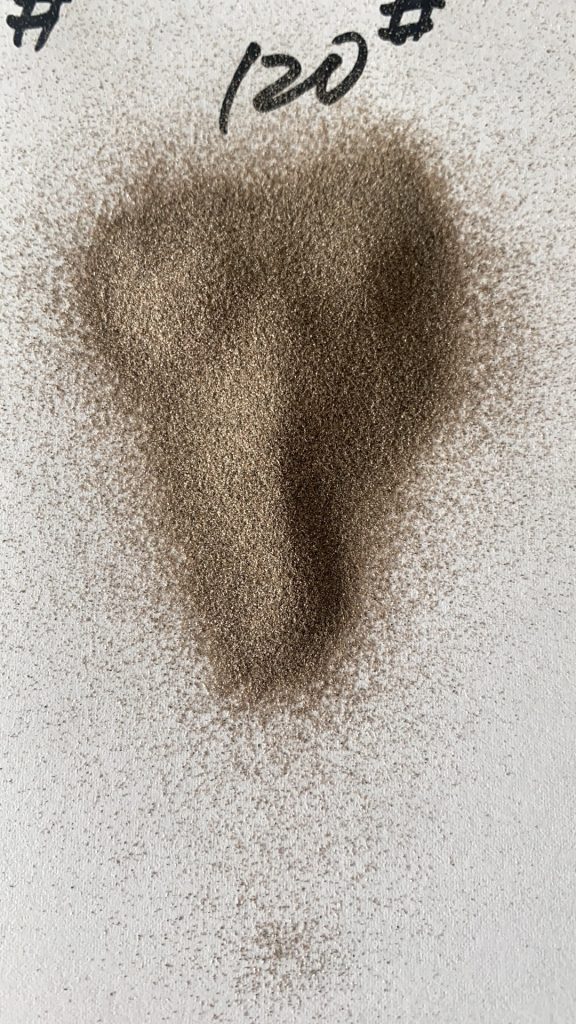
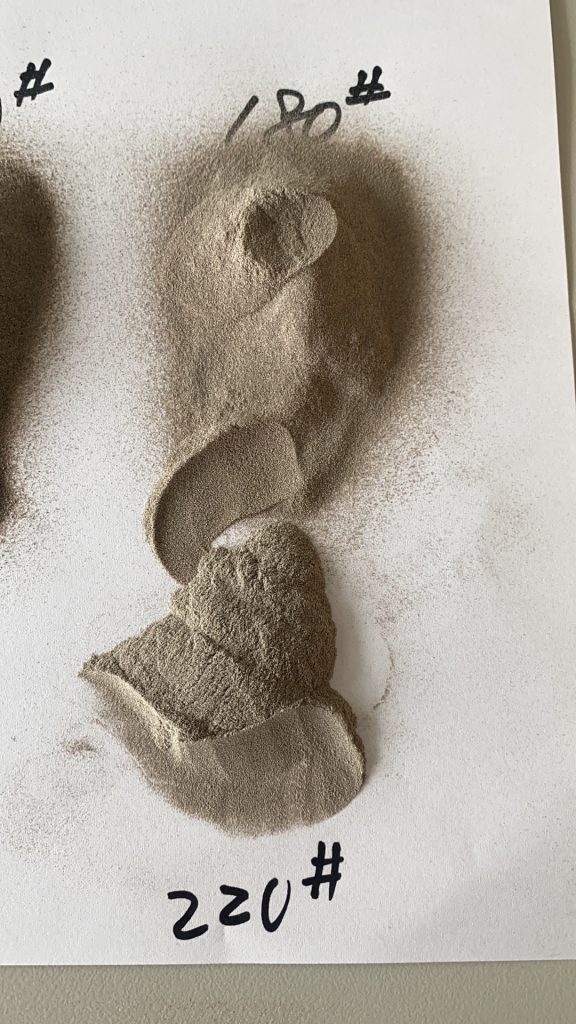
The CHAOYAN catalog has individual P120 and P220 pages with matching English PDS files. Keep the prefix P on every sample and order document; the same number in an F family would identify a different purchasing route. Read the model-specific page and agree the correct distribution and test method for the order. A catalog range does not replace the limits that quality control will use for each delivered batch.
If the present specification lists a standard and edition, include them in the RFQ. Ask the supplier to show how the sample lot was tested and labeled. Model-specific sample values should remain attached to the named model, not generalized to the entire P range. If a value is not published for a model, request the current technical sheet. A blank public cell does not mean the buyer can substitute a neighboring grade's number.
| Material check | P120 | P220 |
|---|---|---|
| Product identity | P120 label and PDS | P220 label and PDS |
| Grading | Agreed P120 limits | Agreed P220 limits |
| Evidence | Trial lot batch result | Trial lot batch result |
Measure both production and use results
Produce trial coated abrasive samples with documented coating, backing, curing and conversion conditions. Check manufacturing behavior as well as the finished product's result. If one grain spreads, adheres or converts differently in the plant, that can affect commercial suitability even when a bench test on a finished sample looks promising. Record scrap, rework and process adjustments using the same definitions for both candidates.
Test the finished belt or paper on representative workpieces at the intended stage. Measure the accepted surface, material removal or use life according to the buyer's method. Avoid assuming a finer designation automatically produces the desired finish across every work material and machine. If the process requires a sequence of grades, trial the sequence rather than treating P120 and P220 as isolated alternatives. Document the transition and inspection point between steps.
| Test layer | Decision supported |
|---|---|
| Incoming grain | Model and distribution conformance |
| Coating line | Manufacturing fit and yield |
| Finished abrasive | Target result on the intended workpiece |
Control the approved change
When a P model is approved, update its raw material item code, purchase sheet, sample, batch report requirement and packing label. Keep P120 and P220 separate even if both serve the same finished product family. If a customer or safety-related process has a formal change procedure, complete it before supplying a revised belt or paper as equivalent to the old one.
Send CHAOYAN the current P grade, coated product construction, work material, trial goal, required standard, quantity and expected volume. Ask for the exact P120 or P220 PDS and a labeled sample. The supplier can support the raw grain decision; the converter confirms coating and final abrasive performance. A clear two-document approach makes both repeat supply and later troubleshooting more reliable.
Selection guidance
Use P120 and P220 as separate trial candidates for a specified coated abrasive stage. Approve the raw grain distribution and finished belt or paper result independently before revising an item code.
Common mistakes
- Choosing a nominally finer grade without defining the operation's target.
- Forgetting the P prefix in a purchasing document.
- Comparing finished products made with different backings and assigning every difference to grain.
- Using one PDS or batch report for both models.
Frequently asked questions
Can P220 replace P120 without a new trial?
A different grade changes the material specification. Test the proposed grain and the finished coated abrasive under the buyer's acceptance method before approving a substitution.
Does the same chemical range make the grades equivalent?
No. Grade identity and particle distribution must be checked separately from chemistry and confirmed in the agreed order document.