TECHNICAL GUIDE / 2026-10-02
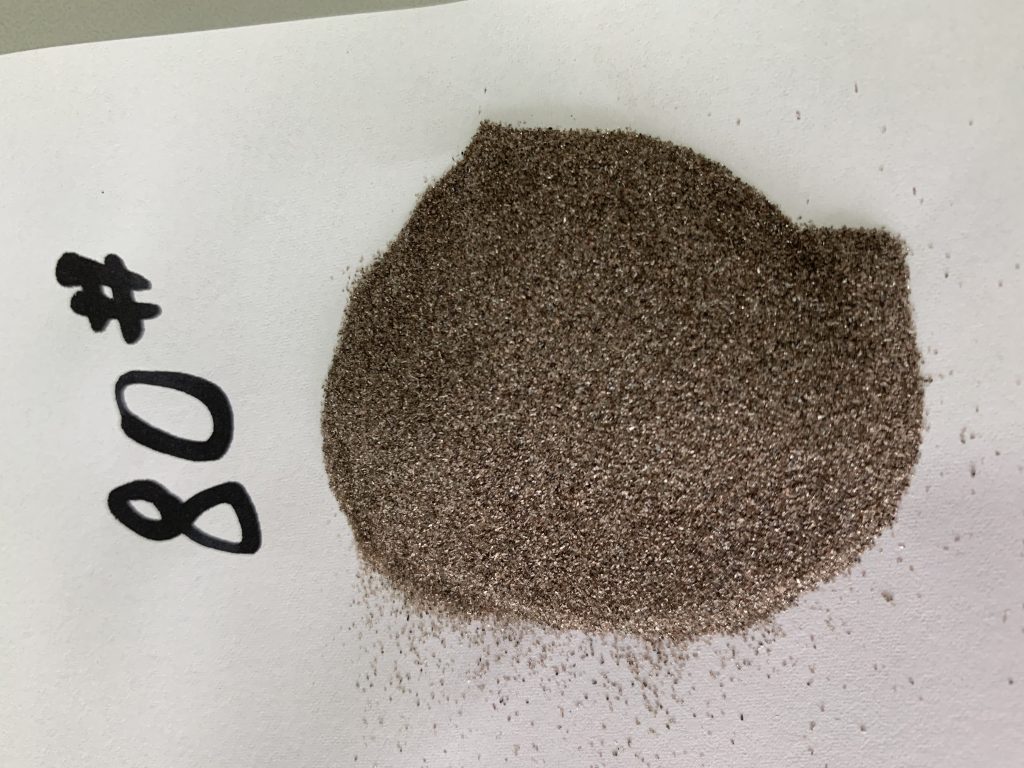
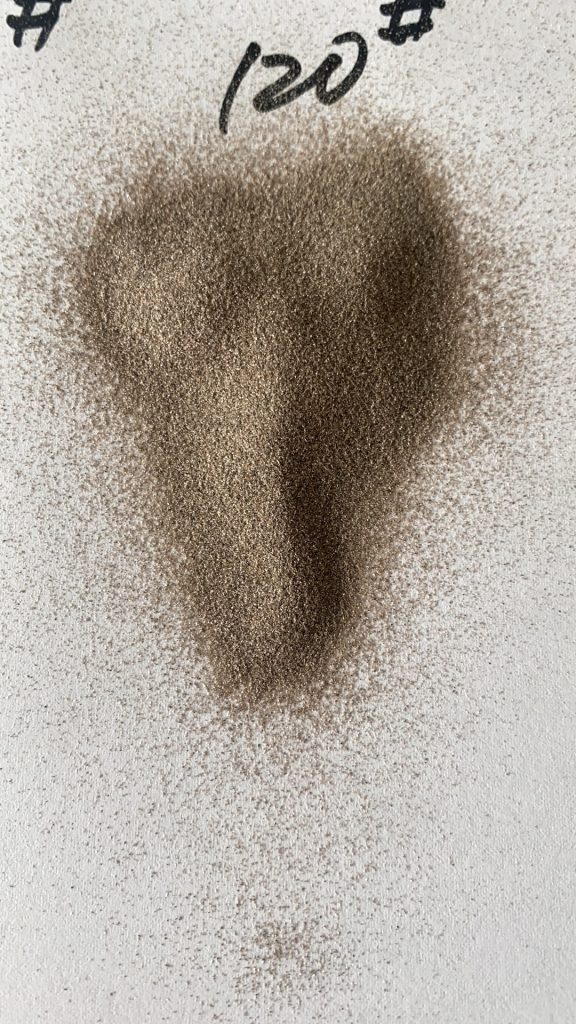
Short answer. F80 and F120 are different F grit grades. Choose the candidate by the tool design, work material and target surface or removal result, then verify the exact particle distribution and test each grade in the finished tool. Neither number alone guarantees a finish.
Name the work before choosing a finer grade
The temptation in a grinding project is to move from F80 to F120 because the current finish appears too rough. That may be a sensible trial hypothesis, but it is not a complete diagnosis. Wheel bond, structure, dressing, work material, feed, coolant and machine condition can also affect the observed surface. Record the current wheel specification and operating conditions, then define the acceptance measure that the proposed grade change must improve.
A different buying question is whether a supplier can replace an existing F80 or F120 source. In that case, keep the grade and applicable standard fixed while evaluating the supplier's sample. Only after material equivalence is established should a separate grade-change trial be considered. This two-stage plan makes the result easier to interpret and protects the production team from a change that seems beneficial only because several other variables moved at once.
| Decision | Hold constant | Change |
|---|---|---|
| Supplier replacement | F grade and wheel recipe | Supplier source |
| Grade optimization | Supplier and wheel recipe | F80 versus F120 |
| Process optimization | Grade and supplier | Recorded operating setting |
Compare the exact raw material documents
Use the F80 and F120 product pages as separate records. Review each English PDS for its published chemistry and physical information, then ask for the current technical sheet covering the order. A family chemical range can appear on both pages, but the grade and particle distribution remain distinct. Specify the distribution standard, edition, method and acceptance limits instead of relying on the nominal label alone.
A model-specific sample value, where shown, belongs to that model and does not automatically become a guaranteed batch limit. Decide which measurements matter to the tool: distribution, chemistry, bulk density, magnetic content or particle shape may be relevant in different formulations. Ask for a batch report and retain a sample of the trial lot. If the buyer's current document uses a different test method, reconcile that method before claiming two materials are equivalent.
| Document | F80 check | F120 check |
|---|---|---|
| Identity | F80 label and PDS | F120 label and PDS |
| Distribution | Agreed F80 limits | Agreed F120 limits |
| Batch result | Trial lot result | Trial lot result |
Test the finished grinding system
Plan a controlled production run for each grade. Make the tool under documented mixing, forming and curing or firing conditions, then test it with the same work material and acceptance procedure. Record the wheel's manufacturing behavior and rejection rate as well as the grinding result. A grade that looks promising in a short cut may create a different issue in forming or repeat production, so the trial should cover the decision the plant actually needs to make.
If the objective is surface finish, use a named measurement method or customer criterion. If productivity or wheel life is the objective, specify how parts, time, tool use and rework are counted. Avoid publishing a percentage improvement without a controlled test and a clear denominator. Where machine settings must change for a grade to work, run an additional documented comparison; it may support a new process, but it no longer isolates the grain effect.
| Result category | Possible measure |
|---|---|
| Raw grain | Distribution and specified material values |
| Tool making | Yield and process variation |
| Grinding | Accepted surface, removal and tool behavior |
| Repeatability | Results across representative lots or runs |
Move the accepted result into purchasing
After a trial, write the complete model into the purchase order and technical sheet. Keep the approved sample, batch report, tool trial record and specification revision together. Confirm packing and labeling so a receiving team can distinguish F80 from F120 without opening every bag. If both grades remain approved for different products, maintain separate item codes and inspection limits.
Send CHAOYAN the current F grade, wheel or grinding process, target result, relevant standard, sample quantity and annual volume. Request the matching F80 or F120 PDS, and ask which published values are reference ranges versus order limits to be agreed. A clear inquiry lets the supplier quote the correct material and lets the buyer test a real change instead of making a decision from the word 'finer' alone.
Selection guidance
Treat F80 and F120 as separate purchase identities. Decide whether the project is replacing a supplier, changing a grade or adjusting the grinding process, and design one controlled trial for that decision.
Common mistakes
- Assuming a finer nominal grade fixes every surface problem.
- Treating a shared chemistry band as proof of the same particle distribution.
- Measuring only a short grinding result while ignoring wheel production yield.
- Keeping both grades under one unlabeled purchasing code.
Frequently asked questions
Will F120 always create a finer finish than F80?
The grade designation suggests a different grain distribution, but the finished surface must be measured in the actual tool and grinding conditions.
Can I use the F80 PDS for an F120 inquiry?
Use the exact product PDS for the proposed model and confirm the order's accepted limits in its own technical sheet.