TECHNICAL GUIDE / 2026-10-02
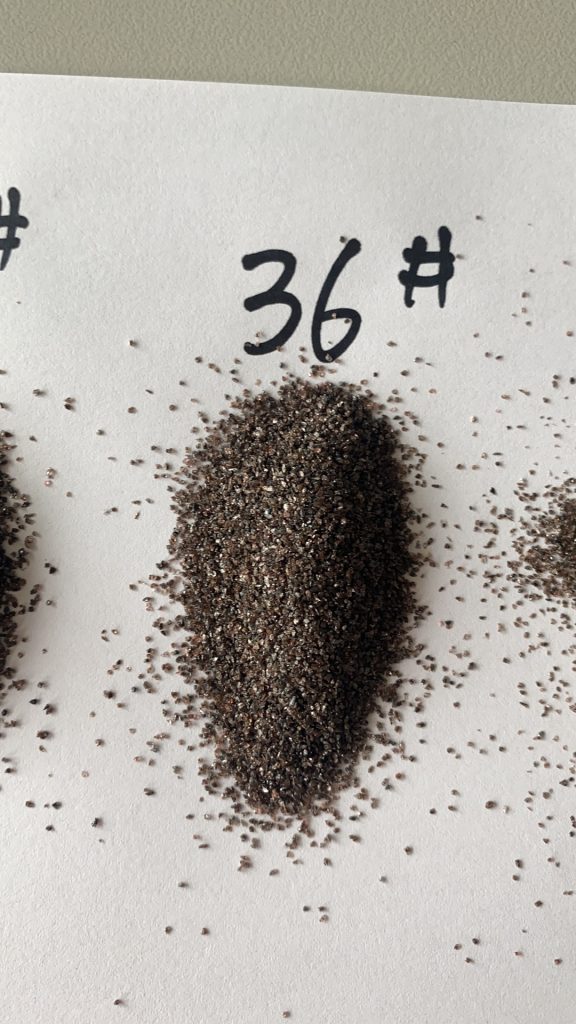
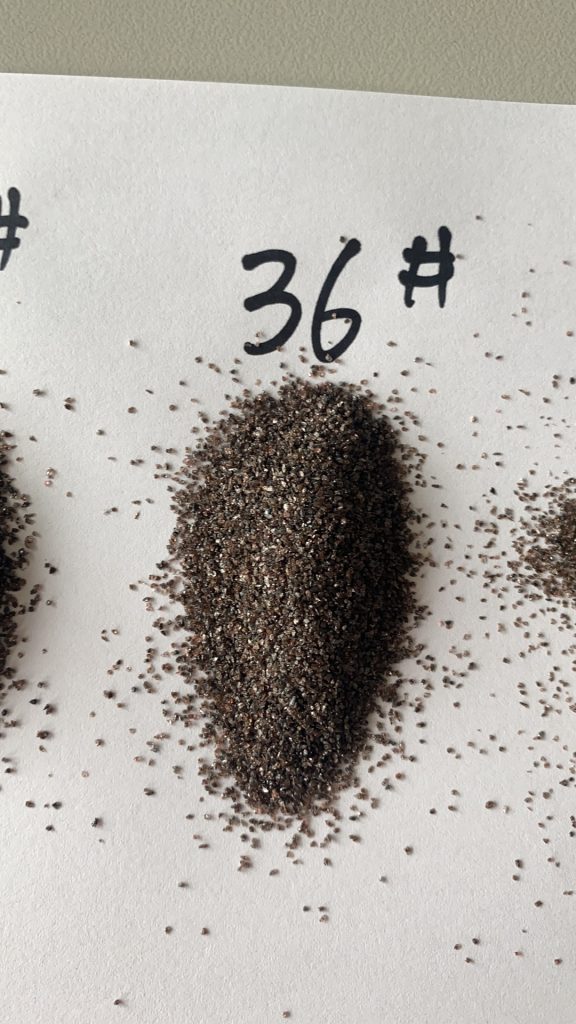
Short answer. Start with the product series, then the grade or size fraction, and finally the applicable distribution standard. F36, P36, 1–3 mm grain and 220 mesh-to-zero powder describe different product forms; a number alone is not a purchasing specification.
The four size families in this catalog
The CHAOYAN product catalog lists F8–F320 abrasive grit, P8–P320 coated abrasive grit, refractory fractions from 0–1 through 8–20 mm, and standard or refractory fine powders. These families use different labels because they enter different manufacturing processes.
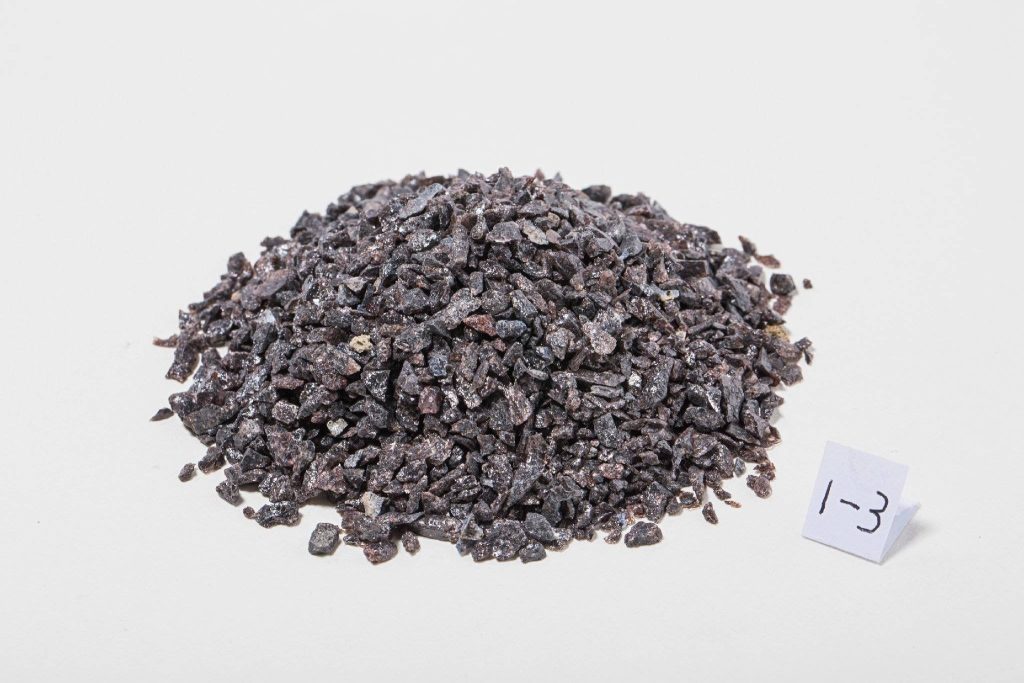
A chart that sorts all of these labels into one numeric column would hide the important distinction. For example, a 1–3 mm refractory fraction is specified by its lower and upper size bounds, while an F grade refers to a controlled abrasive distribution. A mesh-to-zero powder also needs its retained fraction and test method defined.
| Catalog designation | Product form | Typical purchasing context |
|---|---|---|
| F24 / F36 / F60 | F grit | Bonded abrasives or blasting |
| P36 / P60 / P120 | P grit | Coated abrasive production |
| 0–1 / 1–3 / 3–5 mm | Refractory grain | Castable or brick formulation |
| 150 mesh to zero / 200F | Fine powder | Refractory or casting matrix |
Why the same number does not mean the same product
FEPA identifies F grit for bonded abrasive grains and P grit for coated abrasive grains. Its standards define macrogrit mean diameters as ranges; the distribution and test method matter as much as the label. CHAOYAN's catalog includes some designations beyond the scope named on FEPA's public standard listings, so buyers should state the exact standard and edition they require.
A purchase request should name the product series, grade, governing specification, chemistry limits, particle size distribution and application. For a replacement product, send a working sample and the current acceptance criteria.
Selection guidance
Use the chart to identify a product family, then open the individual product page and PDS. Ask for the exact sieve or sedimentation limits in the agreed technical sheet; this page does not substitute an unlicensed full FEPA micron table.
Common mistakes
- Ordering by a bare number such as '36' without F or P.
- Treating a supplier's nominal grade as a complete particle size distribution.
Frequently asked questions
Is F36 equal to P36?
No automatic equivalence should be assumed. Identify the end product and confirm the governing F or P specification and distribution.
Can a size chart replace a batch test report?
No. A chart helps select a designation; the agreed limits and batch result establish what was supplied.