TECHNICAL GUIDE / 2026-10-02
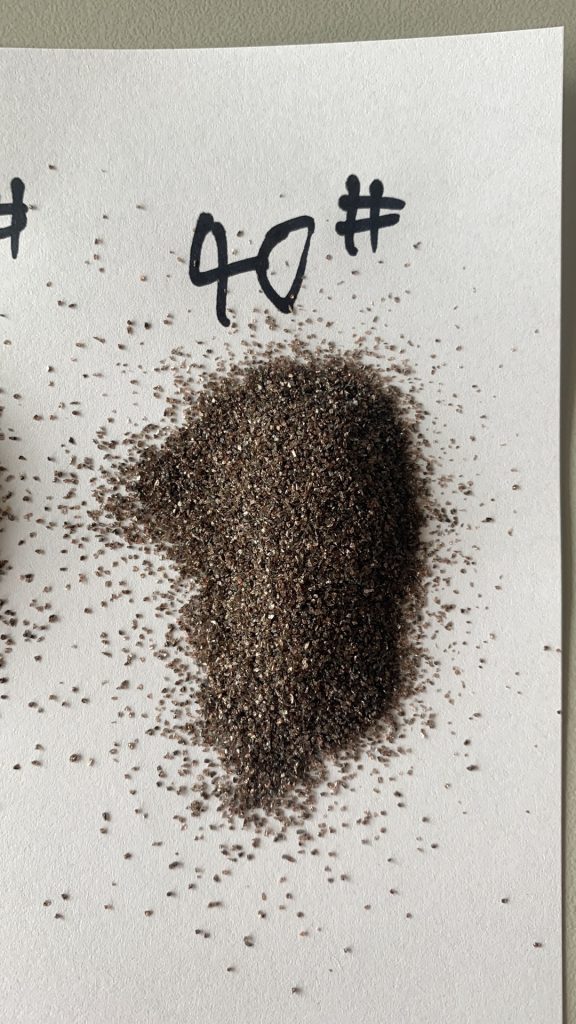
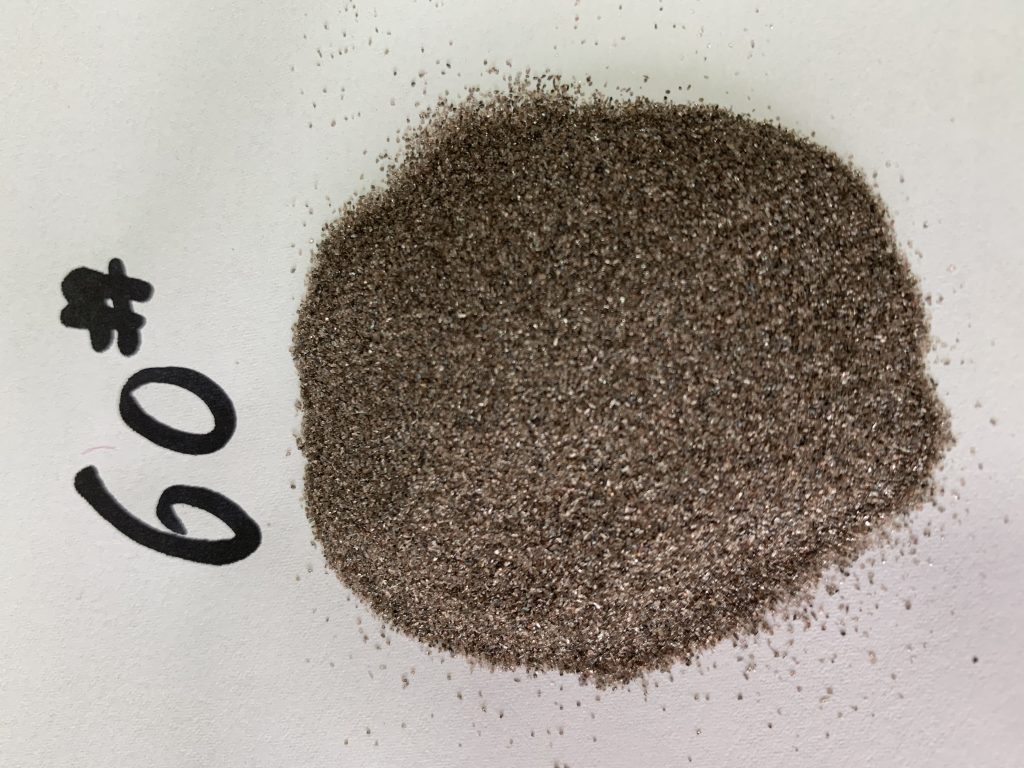
Short answer. P40 and P60 are distinct CHAOYAN coated abrasive grain models. Choose by the belt's intended cut or finish, the specified particle distribution and a controlled trial with the same backing, coating and work material. Neither label alone guarantees finished belt performance.
State the belt requirement first
A belt producer considering P40 and P60 should start with the finished product, not a claim that one grade is universally 'better'. Describe the backing, coating route, workpiece, operation and the acceptance measure. A belt designed for one removal or finish target may call for a different grain trial from a belt used at another stage. Record the current P grade and a working sample so a proposed change can be compared with a known baseline.
If the project is a supplier change, keep the P grade and belt construction constant for the first trial. If it is a grade change, use material from the same supplier where practical and compare P40 with P60 while keeping the rest of the build documented. Separating these questions makes it possible to decide whether a result came from grade, supplier, coating or backing instead of treating every difference as a grain effect.
| Trial question | Keep stable | Compare |
|---|---|---|
| Supplier replacement | P grade and belt build | Supplier lots |
| Grade change | Supplier and belt build | P40 and P60 |
| Process change | Grade and supplier | Recorded coating or backing variable |
Check the correct P series documents
CHAOYAN provides individual English product pages and PDS files for P40 and P60. Check the full P designation on the sample label, quotation and purchase sheet. A bare '40' or '60' may be confused with an F grade intended for a different abrasive product family. The public PDS is a starting document; the agreed order sheet must name the distribution limits, test method, chemistry and any physical requirement relevant to the belt process.
A common chemical series band does not make two P grades the same particle distribution. Ask how the supplier samples and reports the chosen model. If a current material is described by a different standard or revision, reconcile the test basis before claiming equivalence. Keep any model-specific sample data with that exact model and do not copy it into the other grade's acceptance sheet.
| Record | P40 | P60 |
|---|---|---|
| Model label | Full P40 designation | Full P60 designation |
| PDS | P40 document ID | P60 document ID |
| Order limits | Agreed P40 grading | Agreed P60 grading |
Run a belt trial that can answer the buying question
First check that the incoming grain matches its proposed material specification. Then make belt samples under documented backing, make coat, size coat, drying or curing and conversion conditions. Keep those variables as stable as possible across the grade comparison. Test the belts on the same work material and machine setup, recording the output measures that matter to the buyer: accepted surface, cutting behavior, belt use and rejection rate under the chosen method.
A single short test may not show production repeatability. Include normal manufacturing variation and more than one representative workpiece if the commercial belt will serve a range of parts. If P60 requires an adjusted coating recipe, test that as a second, labeled variant. It may lead to a useful new product, but it cannot be presented as evidence that the raw grain alone caused the result.
| Stage | Question |
|---|---|
| Incoming grain | Did the P model meet the agreed sheet? |
| Belt making | Was the construction comparable? |
| Use test | Did the finished belt meet the stated criterion? |
Write the approved belt and grain specifications
Once a candidate passes, update the raw grain purchase sheet with the complete P grade, distribution, relevant material limits, packing and batch report. Separately update the belt recipe or product specification with the accepted backing, coating, curing and test conditions. Link the grain lot to the finished belt lot so an unexpected field result can be investigated without guessing what changed.
A useful inquiry to CHAOYAN includes the present P model, belt construction, work material, target result, technical limits, trial quantity and expected repeat volume. The supplier can provide the matching P40 or P60 PDS and a labeled sample. The buyer then has a traceable path from a search term through material acceptance to a finished belt approval.
Selection guidance
Choose a P40 or P60 trial only after describing the belt and workpiece. Keep raw grain checks and finished belt performance records separate, then approve the model that meets the buyer's defined acceptance method.
Common mistakes
- Substituting an F grade because the number looks similar.
- Assuming a P grade alone guarantees belt life or finish.
- Changing backing, coat and grain in one unlabelled comparison.
- Copying P40 sample values into a P60 order sheet.
Frequently asked questions
Are P40 and P60 interchangeable in one belt recipe?
Their designations and distributions differ. A substitution needs the correct material sheet and a controlled belt production and use trial.
Which PDS should accompany a sample?
Use the document for the exact P model supplied, and keep its lot label and batch report with the trial.