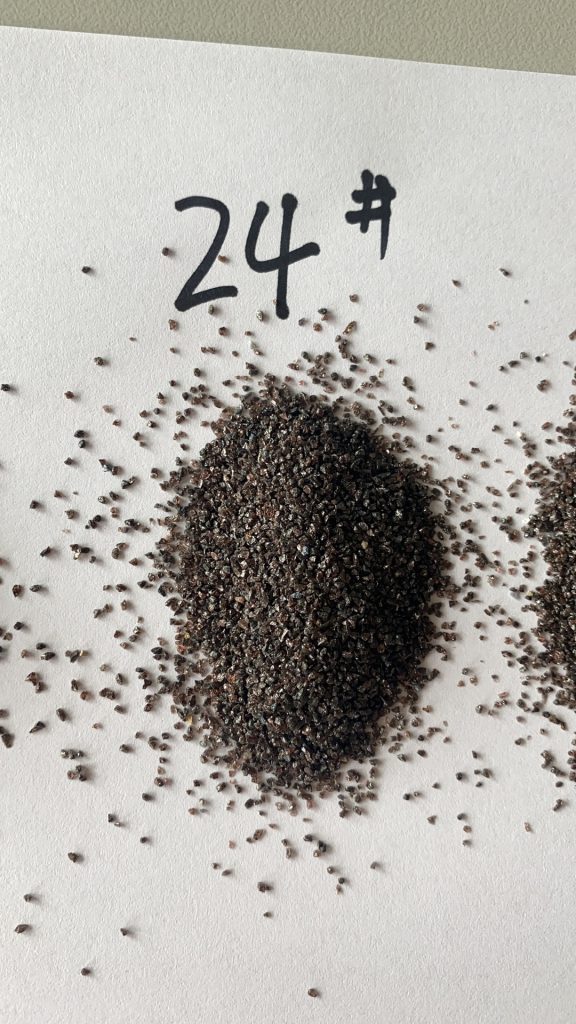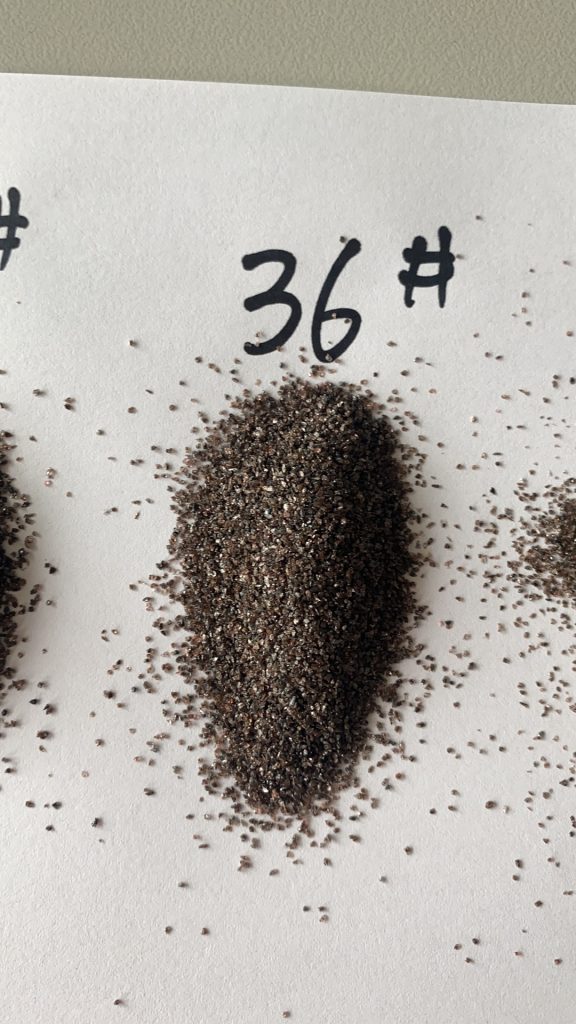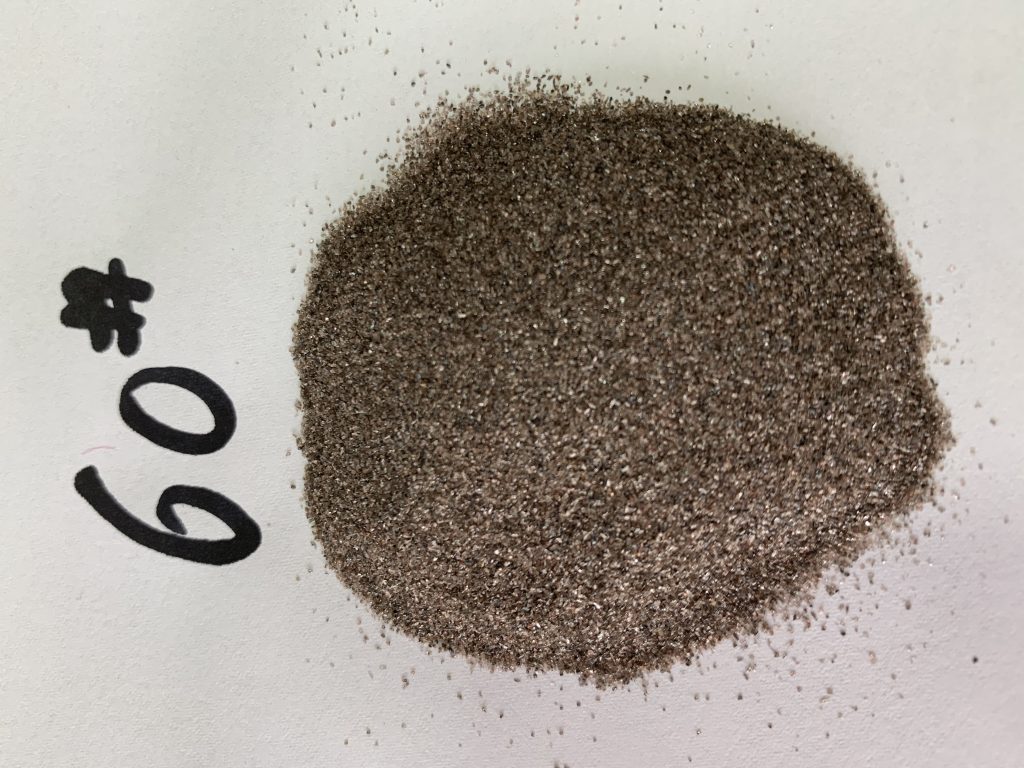
TECHNICAL GUIDE / 2026-10-02
Short answer. Select dry or wet blasting from the substrate, coating or cleanliness requirement, available equipment, dust controls, recovery plan and post-blast drying. Keep the abrasive grade and other test conditions documented. A process that reduces airborne dust can introduce a separate need to control water, residue and drying before coating.
Start with the surface specification
A blasting route should be selected against a measurable surface requirement, not a preference for a machine label. Record the substrate, existing coating or contamination, desired cleanliness, target profile and how those outcomes will be measured. Then record limits on substrate loss and residual abrasive. Brown fused alumina F grit is a candidate for either route, but a grade that behaves well in one setup may not give the same result after water, nozzle geometry or pressure changes.
The decision is especially important when the blasted part will be coated. The buyer may need a profile within a specified band, a clean surface and a time window for coating. A visually uniform finish does not show whether the profile is adequate or whether soluble residue remains. Agree the inspection method before any process comparison, then use representative panels or parts so dry and wet trials answer the same acceptance question.
What changes in dry blasting
Dry blasting sends abrasive through air to the work surface. The equipment team must control media flow, nozzle condition, pressure, stand-off, extraction and containment. Dust can come from the removed layer, the substrate and broken or fine media; do not attribute every airborne particle to the brown fused alumina grade. Sampling the reclaimed abrasive and recording fines helps separate a material change from a maintenance or extraction problem.
Dry media can often be collected and classified for another pass, subject to the site's quality and safety rules. A reuse plan should define when to remove fines, contamination and worn media and when to add fresh material. The original F designation remains useful for the new feed but does not automatically describe a repeatedly reused blend. If a trial changes the nozzle or pressure at the same time as the abrasive, it will be difficult to assign the cause of a different profile or consumption rate.
What changes in wet blasting
Wet blasting brings water into the delivery or work zone, so a process comparison must include water quality, flow, drainage and later drying. It may help manage airborne dust in a given installation, but it does not eliminate the need for containment or worker controls. A wet surface can hide residue and can complicate immediate profile inspection. The process owner should define how the part will be rinsed, dried and protected before the next operation.
For a coating line, ask whether water may carry salts or other contaminants onto the surface, whether trapped liquid can remain in recesses, and how quickly the part is inspected and coated. The answer depends on the actual water source, part geometry and process sequence. If wet media is recovered, separate the abrasive from removed coating and other solids under a documented rule. Do not assume dry-grit screening figures directly characterize a slurry after repeated circulation.
Compare trials on a common basis
Use the same substrate type and initial condition, then define which equipment variables will be held constant and which must change by process design. Record abrasive source and batch, F grade, feed rate, pressure, nozzle or gun, exposure time, water flow where applicable, and the count of reuse passes. Measure the surface profile and cleanliness by the agreed methods. Also record media consumption, dust or sludge handling, drying time and rework. A narrow comparison of abrasive price per bag will miss these operational costs.
A single trial panel may reveal an obvious incompatibility but rarely establishes long-run process stability. Repeat the trial on enough representative parts to see variation from different orientations or geometries. Keep photographs as context and preserve the numeric inspection record. If results differ, change one controllable factor at a time rather than immediately switching abrasive grades. This sequence helps distinguish a grade issue from a pressure, water or nozzle issue.
Selection guidance
Send the supplier the planned dry or wet route, substrate, required profile, coating step, equipment and candidate F grade. Request product documentation for the exact brown fused alumina model. If switching between dry and wet equipment, requalify the surface result rather than carrying forward an old approval unchanged. The sandblasting process checklist covers the broader setup, while the grit-size guide helps narrow a trial list. Final approval belongs to the measured surface and the buyer's process constraints.
Common mistakes
- Calling wet blasting dust-free and omitting containment or slurry controls.
- Assuming one F grade creates the same profile under dry and wet equipment.
- Coating a wet-blasted part before confirming drying and contamination limits.
- Comparing only abrasive purchase price and omitting recovery, drying and disposal.
Related technical guidance
Frequently asked questions
Is wet blasting always gentler than dry blasting?
No universal conclusion follows from the process name. Pressure, nozzle, exposure time, media size and substrate all matter. Compare measured substrate loss and surface profile under representative conditions.
Can reclaimed wet abrasive be specified by the original F grade alone?
No. Reuse can change the effective grain population and introduce contamination. Define sampling and replenishment rules for the circulating media and inspect the finished surface.