TECHNICAL GUIDE / 2026-10-09
How to Choose the Right Brown Fused Alumina Grit Size for Stainless Steel Sandblasting
Pick the wrong grit size for stainless steel sandblasting and the job punishes you twice: a profile too rough shows through thin coatings on visible stainless parts, and a profile too smooth lets the coating peel off in the field. Stainless forgives neither mistake. The good news is that grit selection is not guesswork — it follows a short decision chain: coating specification first, grit size second, trial verification third.
Start With the Coating Specification, Not the Grit
The grit you buy is decided by the surface profile the coating manufacturer asks for. A powder coat on a stainless enclosure and a high-build epoxy on a stainless tank demand different anchor patterns — the coating maker will quote a target profile range (a common band for many epoxy systems is 50–75 μm; thin-film and cosmetic finishes want much less).
Treat that number as the anchor of the whole decision. Everything below is about translating it into a brown fused alumina grit.
What Coarse vs Fine Grit Actually Changes
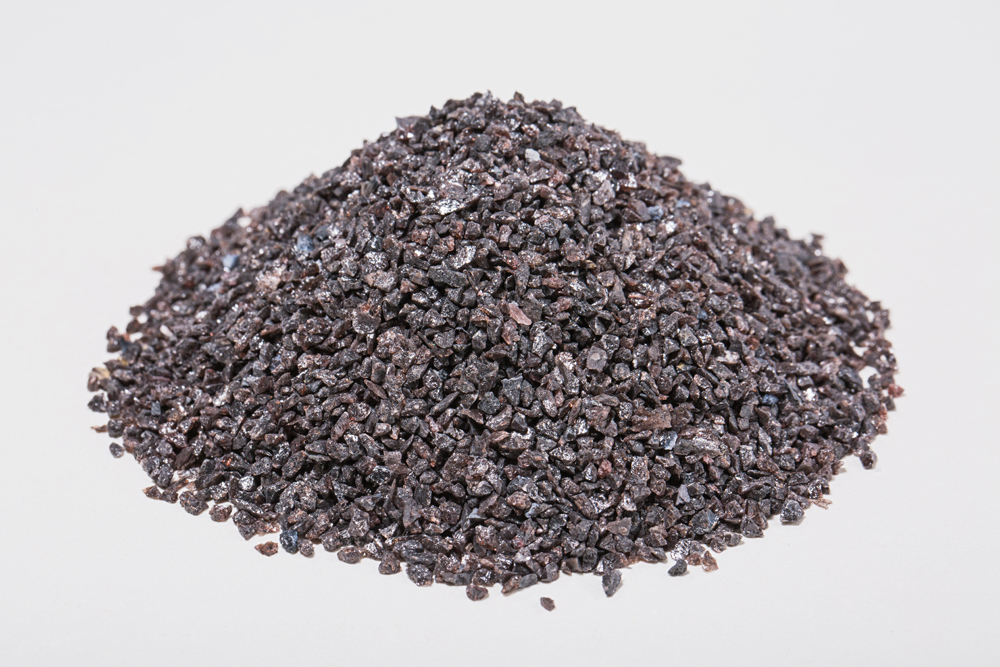
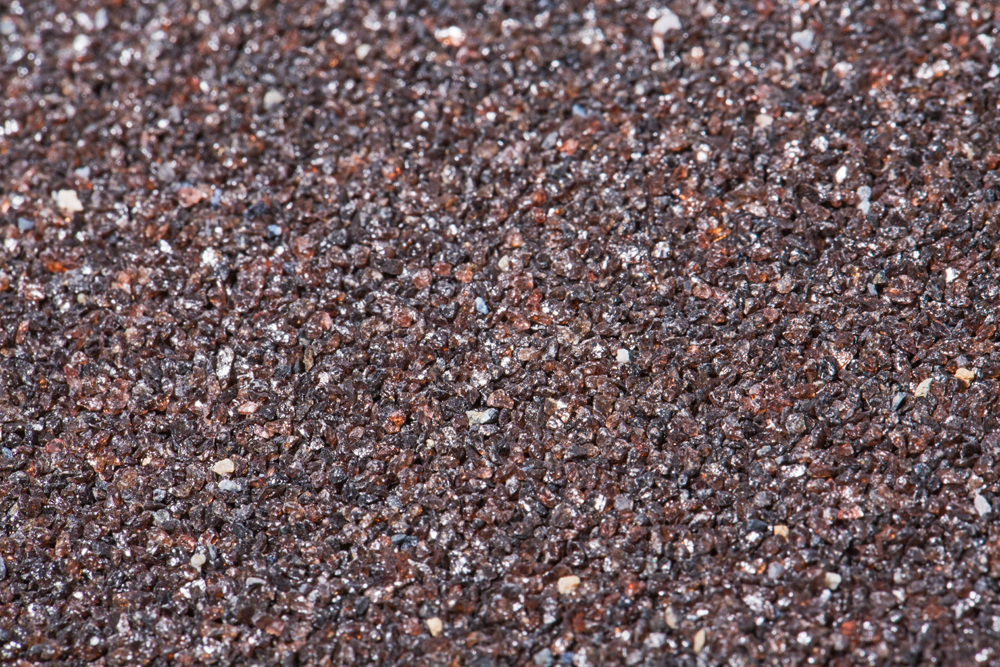
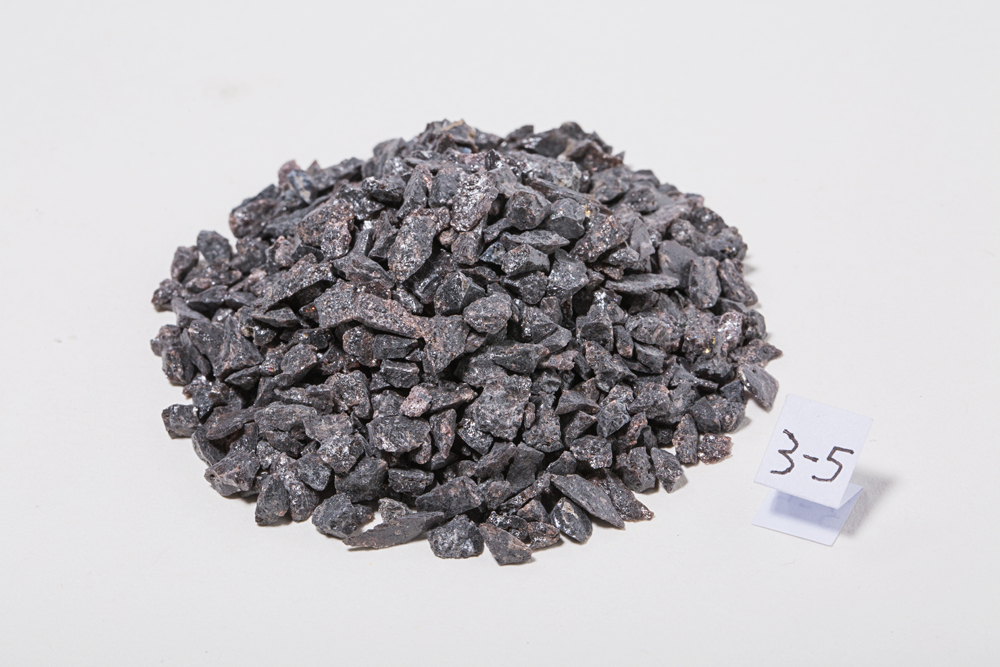
Brown fused alumina F-grit is graded by FEPA standard sizes. The practical rule is simple: coarser grit cuts a deeper anchor profile and removes rust, scale, and old coatings faster; finer grit leaves a smoother, more uniform surface with a shallower profile.
| F-grit | Approx. particle size (μm) | Typical use on stainless |
|---|---|---|
| F24–F36 | ~425–850 | Heavy cleaning, mill scale and weld discoloration removal, deep profiles for thick coatings |
| F46–F80 | ~180–425 | General prep, medium profiles for standard epoxy/paint systems |
| F100–F220 | ~63–180 | Light prep, cosmetic finishes, thin-film coatings |
These are working bands, not laboratory guarantees — exact profiles vary with pressure, angle, distance, and nozzle type. Use the table to shortlist candidates, then verify on a coupon.
Concrete starting points that buyers actually use:
- F24 for stripping heavy scale or discoloration on structural stainless where surface finish is secondary.
- F36 as the workhorse for medium-heavy profiles before high-build coatings.
- F120 for cosmetic or thin-film work where a smooth, even finish matters more than bite.
- The full F-grit series covers F8–F320, so you can step between sizes without changing suppliers.
Stainless Steel Has Three Rules Carbon Steel Doesn't
1. Keep the media dedicated to stainless. Blasting stainless with media that has previously cleaned carbon steel embeds ferrous particles into the surface and invites after-rust. Use virgin or dedicated stainless-only brown fused alumina, and store it separately.
2. Control embedment pressure. Stainless is harder than many carbon steels, but excessive pressure still drives media into the surface or work-hardens thin sheet. Typical shop practice runs moderate pressures and keeps the nozzle at a consistent angle and distance — then adjusts by measurement, not by feel.
3. Mind the heat tint, not just the dirt. Stainless welds and heated areas carry heat tint and oxide layers that need more aggressive media than simple degreasing would suggest. If the job includes weld zones, size the grit for the worst area, not the easy flat plate.
A Practical Coupon-Trial Workflow
Do not order 25 tons based on a table. Run this instead:
- Shortlist two grits, one slightly coarser and one slightly finer than your estimate.
- Blast test coupons under the exact production settings — same machine, pressure, nozzle distance, and angle you plan to run.
- Measure the anchor profile (replica tape or a profile gauge) and check it against the coating spec band.
- Inspect for embedment and uniformity: a clean, even matte finish with no embedded particles and no visible blotching.
- Coat the coupons and test adhesion on a small scale before committing production parts.
The coupon trial is where F-grit's recyclability helps: brown fused alumina holds its cutting edge across multiple cycles in a recovery system, so the grit you validate in trial behaves the same in production as long as you monitor for breakdown and top up with fresh media on a schedule.
Common Mistakes to Avoid
- Oversizing the grit "to be safe." A deeper profile than the coating specifies wastes media, slows coverage, and can leave a finish that thin coatings cannot hide.
- Switching grit size mid-job. Even adjacent sizes produce different profiles. Lock the size, pressure, and technique, and top up with the same F-grit grade.
- Skipping the spec. If the coating manufacturer gives no profile target, ask before you buy media. "Medium profile" is not a specification.
Summary
Choosing the right brown fused alumina grit size for stainless steel sandblasting comes down to three steps: read the coating's target profile, shortlist an F-grit band that matches it, and prove the choice on coupons under production conditions. Coarse for heavy profiles, fine for cosmetic work, dedicated media for stainless every time.
Luoyang Naibao New Materials Co., Ltd. has processed brown fused alumina since 1999 and supplies the full F-grit range F8–F320 for blasting, bonded, and coated abrasive applications. If you are sizing media for a stainless steel project, start with a sample run of your two candidate grits — the coupons will tell you the rest.