TECHNICAL GUIDE / 2026-10-02
Short answer. Choose the product family before choosing a number. F grit is the relevant CHAOYAN range for bonded abrasives and blasting, P grit for coated abrasives, and sized grain or powder for refractory work. Then agree the actual particle distribution, test method, sample and process trial for the selected grade.
Start with the process, not a bare grit number
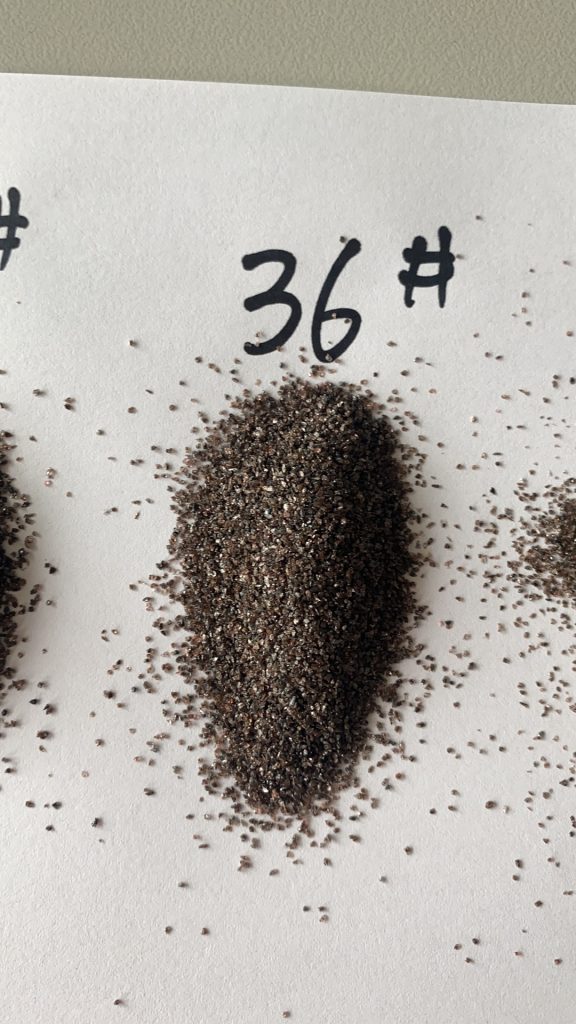
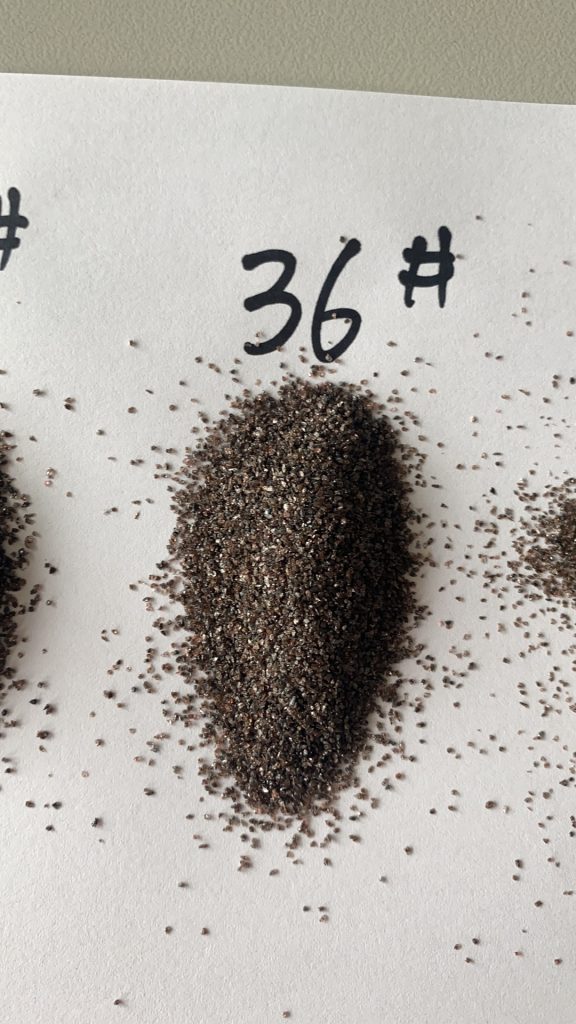
A request for '36 grit brown fused alumina' is incomplete. CHAOYAN lists both F36 and P36, and the two prefixes identify different abrasive product families. A refractory buyer may need a 1–3 mm grain fraction instead of an abrasive grit designation. The first question is therefore what the material will become: a bonded wheel, coated belt, blasting medium, castable aggregate, brick ingredient or fine matrix powder.
Write down the current material, equipment and target result before looking at the catalog. For a replacement purchase, keep the current supplier sheet or a labeled sample beside the new inquiry. For a new process, identify the surface, tool or formulation and the acceptance measure. This context tells the supplier which family deserves review and prevents a quotation for the wrong form of brown fused alumina.
| End use | Starting product family | Specification to confirm |
|---|---|---|
| Bonded grinding wheel or cutting disc | F grit | F grade, distribution, chemistry, bond trial |
| Abrasive belt, paper or cloth | P grit | P grade, coating process, distribution |
| Blasting and surface preparation | F grit | Substrate, target surface, equipment, reuse |
| Refractory castable or brick | Grain fraction and/or fine powder | Fraction bounds, formulation, chemistry |
Understand F grit and P grit
The F prefix is used for grain in bonded abrasive products, while the P prefix is used for grain in coated abrasive products. CHAOYAN's own catalog follows that separation. The number after the prefix is a grade designation; it is not a promise that every particle has one diameter. Particle size distribution and the method used to measure it belong in the purchase specification.
Do not remove the prefix when copying a grade into a sample label, quotation, PDS comparison or purchase order. An F36 offer does not become a P36 offer simply because both carry the number 36. If a current specification names a standard and edition, retain that information. If it does not, ask which test basis the supplier will use before comparing results from different sources. A third-party conversion chart may be useful for orientation, but it cannot replace the accepted distribution limits for a delivery.
| Question | F grit route | P grit route |
|---|---|---|
| Typical finished product | Bonded tool or blasting operation | Coated belt, paper or cloth |
| What to name in the RFQ | Full F grade and applicable standard | Full P grade and applicable standard |
| What remains to be agreed | Distribution, chemistry, sample method | Distribution, chemistry, coating trial |
Use coarse, medium and fine as trial language
Coarse, medium and fine are relative descriptions, not complete order specifications. A coarser candidate can change material removal, surface profile, tool behavior or packing in a formulation, but the actual result depends on the entire process. A finer candidate may be useful when the required finish or formulation calls for it; it may also change dust handling, throughput or the way the product behaves in a bond or coating. Do not promise an outcome from grade alone.
For a meaningful comparison, select two or three named grades from the correct family and run them under controlled conditions. Record the grade, lot, measured distribution, equipment settings, workpiece or formulation, and target result. Change one material variable at a time where practical. If the preferred grade changes, update the written technical sheet and sample label so procurement, production and quality control are all buying and testing the same material.
| Trial stage | Record | Reason |
|---|---|---|
| Before trial | Grade, lot, standard, distribution | Material identity |
| During trial | Equipment, settings, substrate or formula | Comparable conditions |
| After trial | Result, acceptance criterion, deviations | Repeatable decision |
Select blasting grit against the surface and equipment
A blasting buyer should describe the substrate and the surface to be removed or prepared. State whether the work starts with oxidation, coating, scale or another condition, and define the required end state in the project's inspection or coating specification. The abrasive then needs to be considered together with blasting pressure, nozzle, dry or wet method, particle shape and reuse cycle. A grade that works on a flat test coupon may need different treatment on edges, thin parts or delicate features.
Ask for a named F grit product and its PDS, then test it on the actual equipment. Record cleaning time, abrasive consumption, achieved surface condition and any reuse or fines removal when those measures matter to purchasing. If the trial fails, inspect the process and the grain rather than assuming that the next finer or coarser number will automatically solve the issue. Our sandblasting application guidance and individual F grade pages provide the next comparison points.
| Blasting input | Buyer should provide |
|---|---|
| Surface | Substrate and starting condition |
| Target | Cleaning or profile acceptance criterion |
| Equipment | Pressure, nozzle, dry/wet route |
| Reuse | Single use or recycling plan |
Check grinding and coated abrasive applications separately
For a bonded wheel, the grain is only one part of the tool. Bond type, wheel geometry, manufacturing route, work material and operating conditions all affect the finished result. The relevant starting point is an F grade, but approval should compare both the raw grain against its sheet and the finished wheel in a controlled production trial. An F grade that meets a chemical range does not by itself guarantee wheel life, cutting behavior or safety.
For a coated abrasive belt or paper, begin with the P series. Describe the backing, make coat and size coat context, current P grade and the finished product's performance criterion. First establish that the grain matches the agreed material requirements. Then test belt or paper samples while keeping coating and backing variables documented. A grain PDS describes raw material; it is not a finished belt performance certificate. If the process changes at the same time as the grain, note the change before attributing any difference to grit size.
| Application | Raw grain question | Finished product test |
|---|---|---|
| Bonded wheel | Which F grade and distribution? | Wheel trial under controlled bond/process |
| Coated belt | Which P grade and distribution? | Belt trial with documented backing/coating |
Treat refractory fractions and fine powders as a different size decision
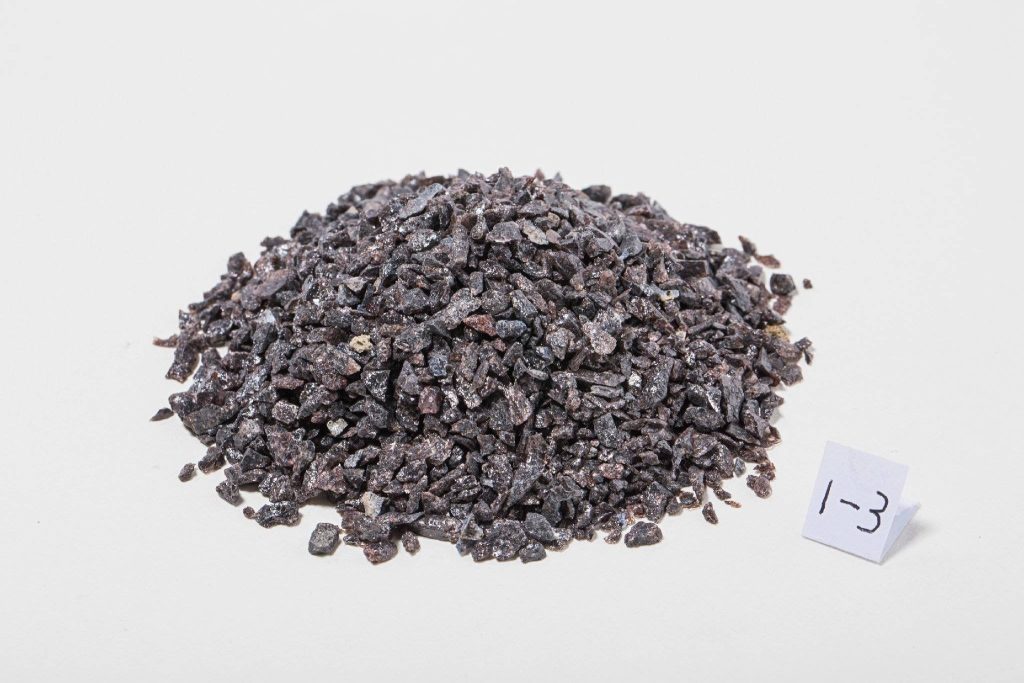
Refractory work is often specified in millimetre fractions or powder designations rather than an F or P abrasive label. CHAOYAN lists 0–1, 1–3, 3–5, 5–8, 8–15 and 8–20 mm refractory grain, plus standard and refractory fine powder products. A castable or brick can combine several fractions. The buyer should therefore list each input separately and define its upper and lower bounds, test method, chemistry requirements and intended role in the formulation.
Do not transfer a chemistry or grading value from an abrasive F page to a refractory grain page. Some product pages show published numeric values; others ask for the agreed technical sheet. Keep aggregate, fine matrix material and any custom fraction separately identified in samples, quotations, packing labels and batch reports. Trial the mixture in the actual formulation, then approve the raw material limits and finished product criteria as separate decisions.
| Form | Example catalog designation | Buyer decision |
|---|---|---|
| Refractory grain | 1–3 mm | Fraction bounds and grading |
| Fine powder | 200F or mesh-to-zero | Complete powder specification |
| Combined supply | Several grain fractions | Separate line items and labels |
Turn the selected size into an order specification
Once a trial identifies a candidate, the purchase order should state the complete product name, family, grade or fraction, applicable standard and edition, chemistry limits, physical properties where relevant, particle distribution, test methods, packing and batch reporting requirements. The product page and English PDS are useful starting records; guaranteed values follow the agreed technical specification and delivered batch test result.
When requesting a quote, send the application, current grade or sample, target quantity, destination and any acceptance sheet. Ask that the quotation, sample label and PDS refer to the same product. If a custom size or particle shape is needed, write the desired limits as a proposal and confirm feasibility before treating them as available stock. This closes the gap between a search term such as 'fine brown fused alumina' and a material that can be sampled, tested, ordered and checked again on the next delivery.
Selection guidance
Compare the F grit, P grit and refractory grain families only after naming the end use. Open the exact product page, download its English PDS and send the current material, application, required standard, quantity and trial goal through the inquiry form.
Common mistakes
- Ordering by a number without the F or P prefix.
- Using a general conversion chart as the delivery acceptance specification.
- Changing the grade and process settings together, then assigning the result solely to grit size.
- Applying abrasive grit values to refractory fractions or fine powders without a matching technical sheet.
Frequently asked questions
Is a higher grit number always the right choice for a finer finish?
Grade numbering helps identify a candidate, but the actual finish depends on the product family, distribution and process. Verify the result in the intended application.
Can I substitute P36 for F36?
The prefixes identify different abrasive product families. Any proposed substitution needs an agreed specification and a process trial; the shared number alone is insufficient.
What should I send when I do not know the grade?
Send the end use, current material or sample, equipment or formulation, target result, quantity and acceptance criteria. The team can then identify a starting family and trial candidate.