TECHNICAL GUIDE / 2026-10-02
Short answer. A grit designation is incomplete without the applicable distribution and test method. Name the F or P product, standard and edition, sampling plan, reported fractions and acceptance limits; then compare a delivered batch result on the same basis.
A grade label is not a full distribution
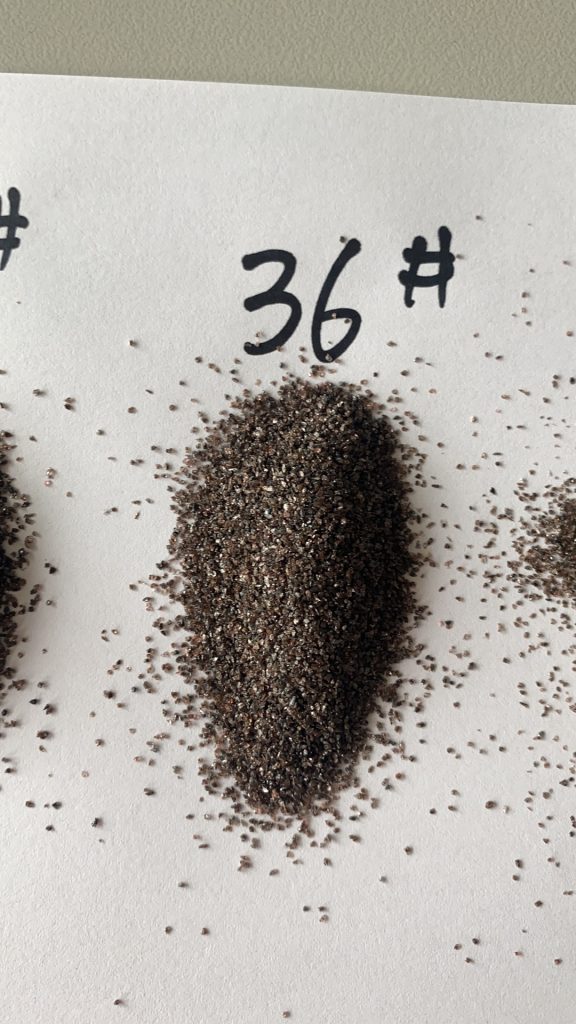
Brown fused alumina buyers commonly ask for an F or P number, then receive several offers that appear identical. The grade label identifies a product family and nominal category, but the spread of particles and the method used to measure it still matter. FEPA's public overview distinguishes F grain for bonded abrasives from P grain for coated abrasives. The full prefix belongs in the RFQ, sample label, order and test report.
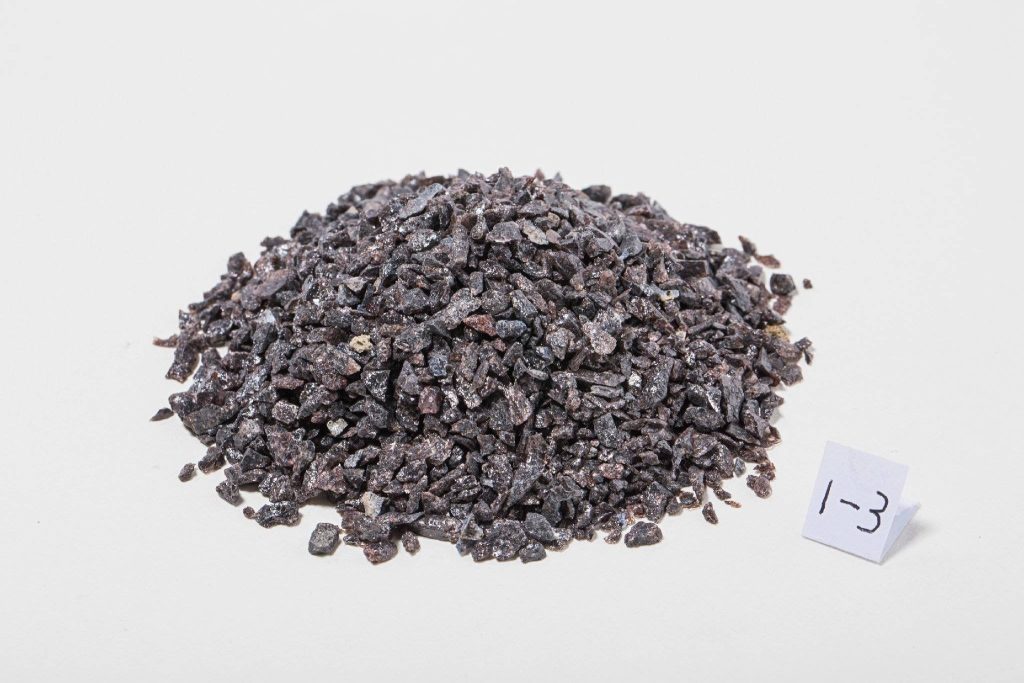
For refractory grain, the buyer may instead use a millimetre fraction. Do not force that material into an abrasive grit table. A 1–3 mm label and an F grade belong to different purchasing descriptions, each with its own test basis. Ask the technical owner which distribution is needed for the finished process rather than copying a general chart into every product sheet.
| Product route | Identity to state |
|---|---|
| Bonded abrasive grain | F prefix, grade and applicable standard |
| Coated abrasive grain | P prefix, grade and applicable standard |
| Refractory grain | Fraction bounds and agreed sieve method |
Write a repeatable sieve test instruction
An acceptance sheet should identify the sample lot, sampling plan, sieve set or applicable method, preparation, reporting units and limits. The exact standard and edition need to be agreed by buyer and supplier. A test performed under a different method may not be directly comparable even when both reports use similar grade names. Put the method beside the limits so receiving staff do not have to guess which procedure a table came from.
Sampling is as important as the instrument. Define which containers or bulk portions contribute to the lot sample, how they are combined and how a retained sample is handled. Label the sample with model, lot, date and sampler. If a report fails, that chain allows a planned retest. Without it, an apparently precise grading result may describe an unrepresentative scoop or material from the wrong shipment.
| Instruction item | Reason |
|---|---|
| Lot definition | Sets what the result represents |
| Sampling plan | Makes the sample representative |
| Sieve or method | Makes reports comparable |
| Limits and units | Creates a pass/fail basis |
Interpret a distribution in application context
A supplier can deliver material that meets the distribution sheet while a wheel, belt or blast process still misses its finished target. Grain shape, chemistry, equipment and formulation may also matter. Keep the sieve result as one raw material check, then run the appropriate application trial. If the process result changes, examine both the new grain distribution and the production conditions before assuming the sieve report explains the whole difference.
For a supplier replacement, compare the incumbent and candidate samples using the same method and normal process. If the buyer also changes F grade or P grade, document that as a separate decision. A fair comparison can reveal whether the proposed distribution is sufficiently similar for the intended tool, but a numerical match alone does not prove finished performance equivalence.
| Evidence | Question |
|---|---|
| Sieve report | Did the lot meet material grading limits? |
| Process record | Were manufacturing conditions comparable? |
| Finished test | Did the application meet its target? |
Turn the result into supplier and receiving documents
Once a candidate is accepted, attach the distribution and method to the purchase specification. Ask the supplier to report each delivered lot against those same limits. Keep the PDS, accepted sample and batch report linked by exact product identity. If a nonstandard distribution is required, agree feasibility and test limits before ordering; a custom name without measurable bounds will not help quality control.
CHAOYAN provides individual F and P product pages and English PDS files. Send the exact grade, intended application, current standard and edition, target distribution, sample need and volume in the inquiry. The team can discuss a named candidate and order-specific technical sheet. This avoids a common purchasing error: approving a grade word while the two parties have never agreed what particle population will be accepted on delivery.
Selection guidance
Specify the complete product designation and the actual grading test. Compare supplier samples and delivered lots under that method, then validate the grain in the finished process.
Common mistakes
- Dropping the F or P prefix from a grade.
- Treating a nominal number as a full sieve distribution.
- Comparing reports produced under different methods without reconciliation.
- Using a grit chart as a guaranteed performance table.
Frequently asked questions
Can I convert an F grade directly to a P grade by number?
No. They are different abrasive grain families. Use the applicable standard and distribution for the intended product, then trial the material.
Does a passing sieve report approve the finished wheel or belt?
No. It confirms one raw material requirement. The finished product needs its own controlled acceptance test.