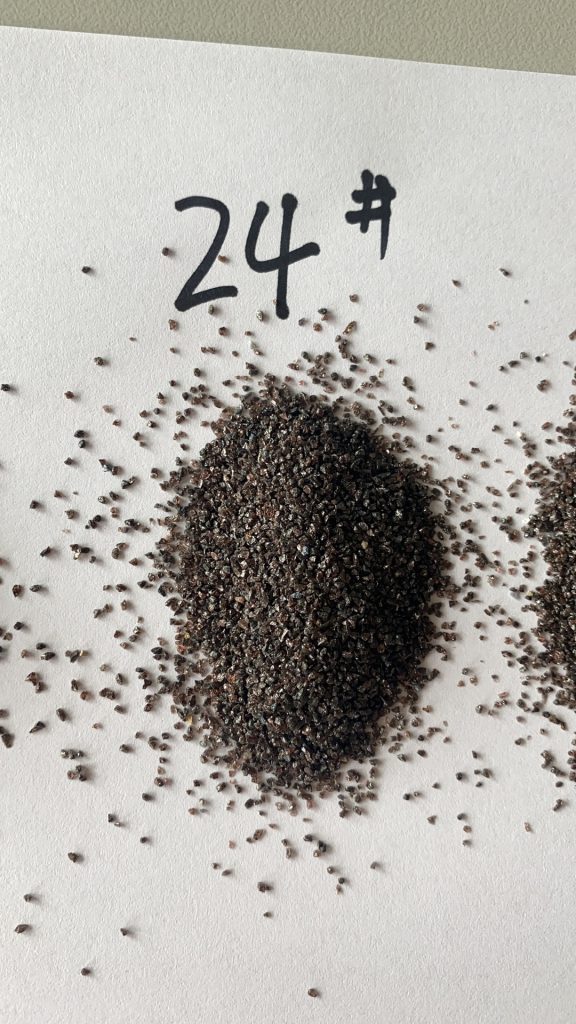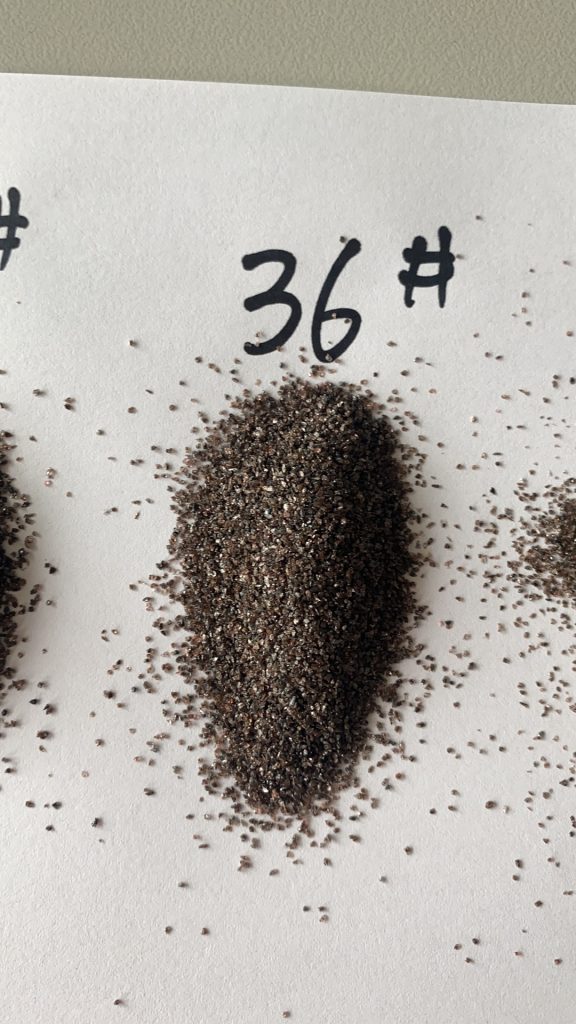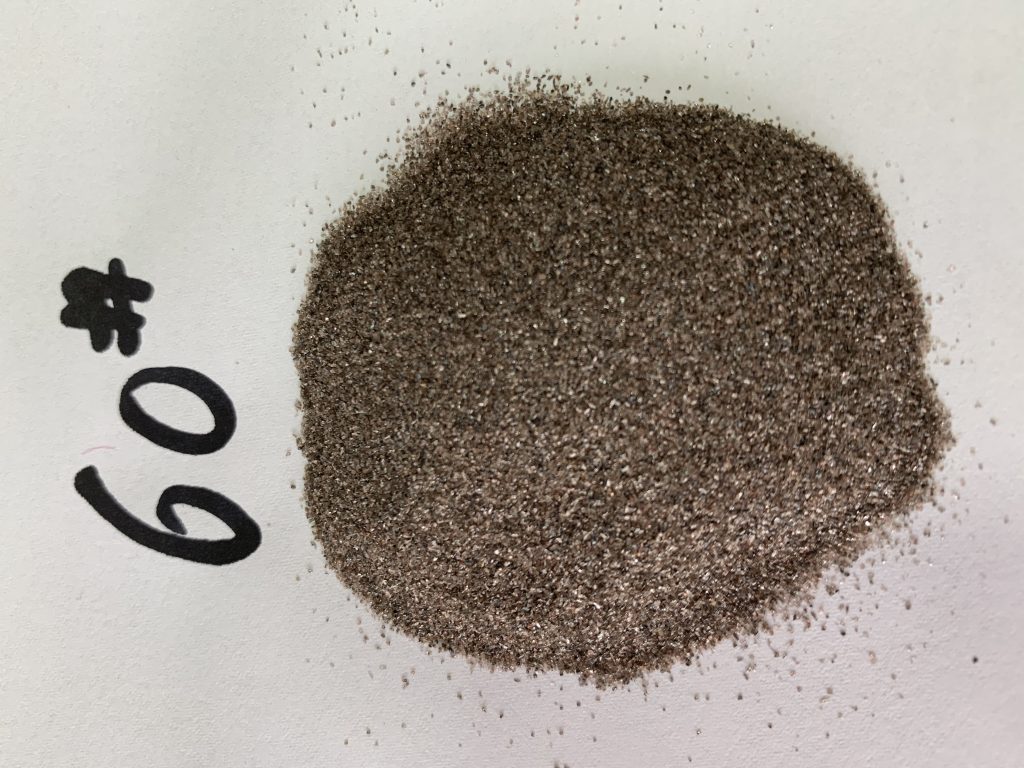
TECHNICAL GUIDE / 2026-10-02
Short answer. A sieve result is only as comparable as its method and equipment. Confirm the applicable F grit standard and purchase limit, inspect sieve identity and condition, prepare a representative dry sample, follow the agreed operating procedure and report each retained fraction. A reference micron value is not an acceptance limit for every particle.
Agree the test before comparing numbers
F grit particle-size testing should follow the current standard and any tighter purchase limits agreed for the specific product. A supplier report and buyer report cannot be compared fairly if they use different sieve sets, sample preparation or reporting basis. Write the grade with its F prefix, the document revision, retained-fraction limits and what constitutes a passing lot. The public grit-to-micron reference tool is useful for orientation but does not reproduce the full standard or define acceptance for a shipment.
Ask the laboratory to identify the decision unit and sample source. A result from a supplier's production sample and a result from one damaged receiving bag may be answering different questions. Record bag or lot IDs and the route used to reduce a bulk sample into a test portion. Good equipment checks cannot rescue an unrepresentative sample, so the sampling plan and sieve procedure should be reviewed together.
Inspect the stack itself
Verify each sieve's designation, opening, frame identification and position in the specified stack. Check screens for tears, blinding, deformation or material trapped from a previous test. Follow the laboratory's verification or calibration schedule. A sieve that looks clean from above may still have particles lodged in the mesh or frame joint. If its condition is uncertain, remove it from acceptance testing until it has been checked under the lab procedure.
Confirm pan and cover fit so material is not lost during shaking. Record the shaker model, run settings and duration required by the method. Different equipment or settings can change retained fractions. A lab should not extend or shorten a run to make a borderline grade pass without a documented method basis. Clean the stack between products, especially when moving from coarse to fine grades; carryover can appear as an unexpected oversize or fine fraction.
Prepare and weigh the sample
Use a representative portion of the named lot, reduced with a method that minimizes segregation. Weigh the starting mass and follow the specified drying or conditioning rule. Do not dry or wash a sample merely because it seems convenient; the chosen preparation must match the method and the property being checked. Clumps can distort a dry sieve result, but breaking them aggressively may also change the grain population. The procedure should say what to do.
After sieving, weigh material on each sieve and in the pan, then check mass balance under the laboratory's tolerance. Lost material can make percentages misleading. Report the individual retained fractions and the calculated cumulative values needed by the specification. A simple statement that F36 is about 500 microns is not a substitute for this distribution report. Record observations such as unusual clumping or foreign particles separately from the numeric result.
Resolve disagreements systematically
If buyer and supplier results differ, compare the exact lot, sampling route, sample conditioning, sieve IDs, shaker settings and calculation basis before debating the material. Retain both raw tables. If a retest is allowed, use the written rule and a labeled retained sample. Do not repeatedly test until one favorable result appears. Where the disagreement is near a limit, the purchase agreement should define how uncertainty and independent verification are handled.
An accepted sieve result confirms one raw-material requirement under the named method. It does not prove wheel cut, blasting profile or refractory packing. Keep those application checks separate. Conversely, a process complaint does not automatically mean the sieve report was false; the investigation may need shape, chemistry, equipment and handling data as well. The value of a controlled sieve test is that it narrows the question without pretending to answer every downstream outcome.
Selection guidance
When requesting an F grit quotation, provide the exact grade, governing standard, any order-specific retained-fraction limits, sampling plan and reporting format. Request the matching CHAOYAN PDS and batch report where available. The sieve-analysis guide explains how to read a purchasing report, and the FEPA chart guide clarifies grade designations. A reliable acceptance process joins those documents to a verified stack and representative sample. It should be reproducible by buyer and supplier rather than dependent on an informal micron label.
Common mistakes
- Using a damaged or blinded sieve because its label is correct.
- Comparing two reports without matching preparation and stack settings.
- Ignoring mass loss during a sieve run.
- Substituting a single micron reference for the grade's distribution limits.
Related technical guidance
Frequently asked questions
Can the F grit converter replace sieve acceptance testing?
No. It gives selected reference values and public bands, not the full current standard or lot distribution result.
If two laboratories disagree, must one be wrong?
Not necessarily. Sampling, conditioning and equipment differences may explain the gap. Reconcile methods and use the agreed retest process before deciding the lot's disposition.