TECHNICAL GUIDE / 2026-11-15
Thailand: Sourcing Abrasive Grain for Coated Abrasive and Non-Woven Plants
Thailand's coated abrasive industry runs on imported grain. The sanding belts, flap discs and non-woven wheels made in Thai factories — many of them owned by Japanese and Taiwanese parent companies — start life as fused alumina melted in furnaces thousands of kilometres away. The practical question for a Thai buyer is how to buy that grain to a parent-company specification sheet, at a landed cost that survives the next audit, from a supplier who delivers the same grain lot after lot.
A market that buys almost everything it uses
Thailand has no commercially significant domestic production of artificial corundum. IndexBox's Thailand market report describes the market as structurally import-dependent, with an estimated 80–95% of supply arriving from China, Japan and Germany. Abrasives and surface preparation account for an estimated 40–50% of domestic demand, followed by refractories at 20–30%.
The trade volumes behind that picture are public. IndexBox's Asia market analysis records Thailand importing 23,000 tons of artificial corundum in 2024, at an average import price of about $1,067 per ton. Demand is expected to keep growing at a mid-single-digit annual rate through 2035, driven by automotive, construction and electronics manufacturing in Thailand's industrial corridors. The message for a sourcing manager is simple: the market is growing, the grain is imported, and the suppliers who win are the ones who can document consistency.
Sources: IndexBox — Thailand Artificial Corundum Market Report 2026 and IndexBox — Asia Artificial Corundum Market Overview 2024. Figures are IndexBox estimates; the import price is a reported market average, not a supplier offer.
What Thai coated abrasive plants actually buy
Three product families dominate Thai demand for brown fused alumina grain:
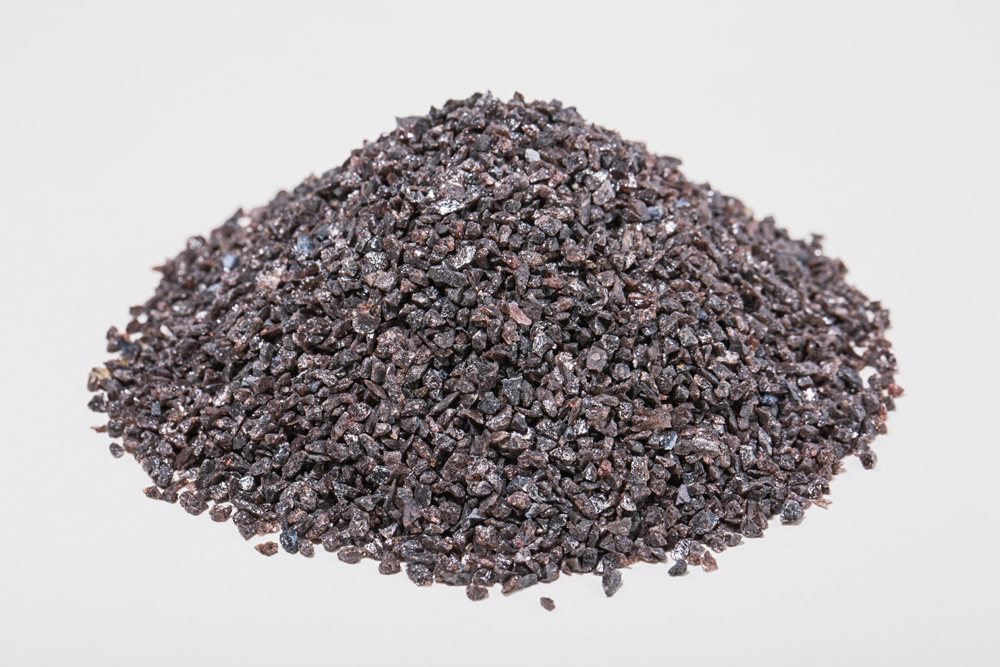
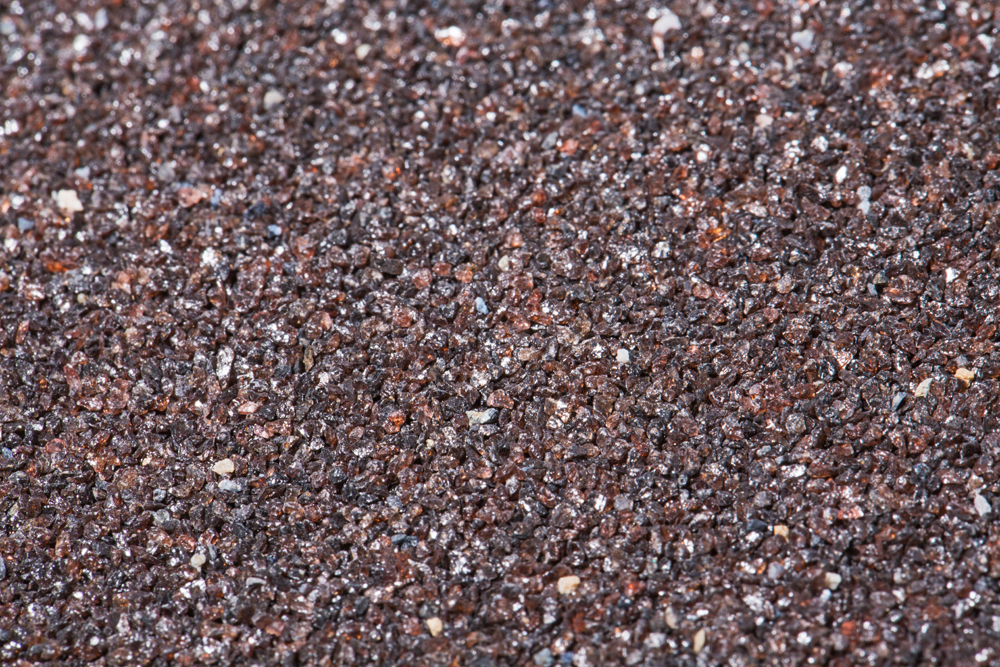
P-grit for coated abrasives. Sanding belts, sanding discs and abrasive paper are built on FEPA P-grit — P24 through P320 and finer — where the grain is electrostatically oriented onto a backing and bonded with resin. The P designation is not a finer version of F-grit; it is a separate FEPA sizing system with its own particle-size distribution rules. An order that writes "F80" when the line needs "P80" will show up as a coating defect, not a paperwork error. Our P-grit series is sized to the FEPA P system for exactly this use.
Grain for non-woven abrasives. Non-woven wheels and hand pads need grain that bonds evenly into a fibre web without shedding loose particles or clogging. The grain is usually a mid-range P-grit, and the deciding factor is uniformity: a narrow size distribution keeps the web cutting evenly across its whole face.
Grain for resin bonded wheels. Thai plants serving the automotive and metalworking sectors also run resin bonded wheels, where brown fused alumina's toughness is the point. Here the buyer is usually choosing between standard grain and heat-treated (calcined) grain, and the decision turns on wheel life in their own application, not on a catalogue claim.
The specification sheet is the contract
Japanese and Taiwanese parent companies run some of the strictest incoming-goods discipline in the abrasive trade. Three things matter most when a Thai plant qualifies a new grain source:1. Particle-size consistency, lot to lot. A coated line is calibrated to a grain distribution. If one lot runs coarse and the next runs fine, the belt finish changes. Ask for the sieve analysis on the actual lot, not a generic product data sheet, and compare the distribution curve — not just the nominal grit number — against the previous lot.
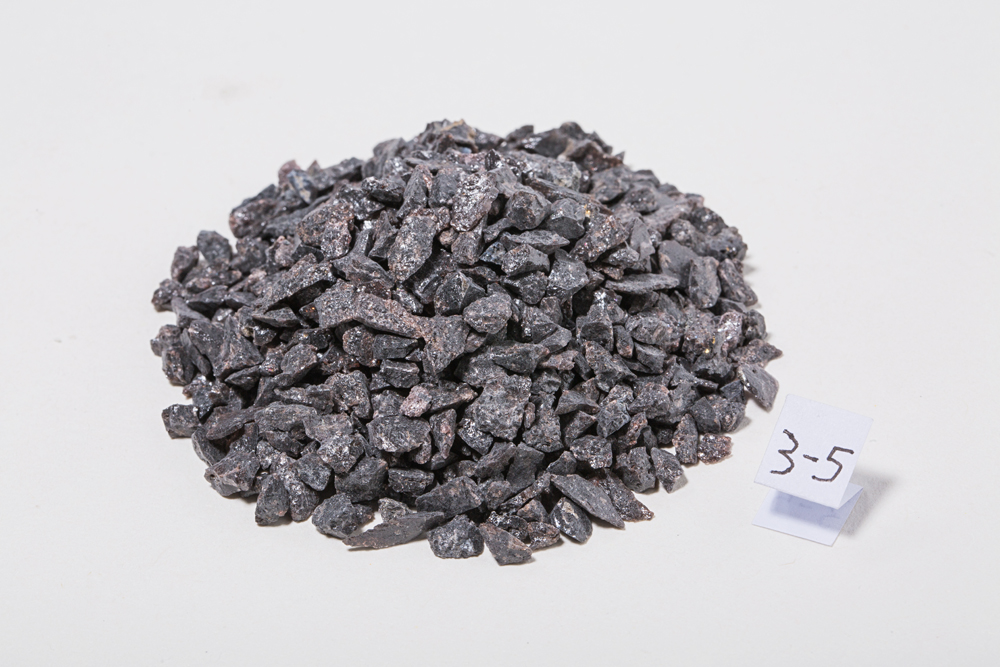
2. The right designation on the order. FEPA F-grit and P-grit are different systems. JIS numbers add a third vocabulary for plants that also serve Japanese customers. Write the designation exactly as the specification sheet writes it, and confirm in writing that the supplier's sizing standard matches. Our grit-size chart exists to prevent exactly this class of mistake — conversion tables are approximate, and an approximate conversion should never be written into a firm order unconfirmed.
3. Packaging that survives a Thai warehouse. Paper bags on pallets are the norm, and humidity is the enemy: damp grain clumps and flows badly through coating lines. Check the bag construction, the pallet wrapping and the storage advice before the first container is loaded, not after it arrives wet.
Lead times, landed cost and the buffer habit
Import lead times from China typically run two to four weeks, while European-origin material can take six to ten weeks, according to IndexBox's Thailand report. That gap is why Thai distributors hold larger buffer inventories and favour regional suppliers: a line stopped for want of grain loses more in a day than a cheaper shipment saves in a month.
Landed cost is worth calculating the same way. The grain price is only the first line. Add freight, import duty (which varies by product code and origin, with preferential trade agreements sometimes reducing the landed cost), warehousing and the cost of holding buffer stock. Buyers who compare offers only on a per-tonne basis, without the freight and duty lines, routinely pick the offer that costs more by the time the grain reaches the plant. A first order is the right moment to fix the calculation: confirm the real door-to-door cost on a trial quantity, and only then scale up.
Qualifying a supplier before the first container
A sensible qualification sequence for a Thai coated abrasive plant looks like this:- Start with a sample, tested on your own line. A laboratory report is necessary; a production trial is decisive. Run the sample through the actual coating or bonding process and check the finish, not just the certificate.
- Read the batch test report line by line. Alumina content, silica, iron oxide, titania, magnetic content and sieve analysis should all be there, lot-specific. If a report reads identically for every lot, it is not a batch report.
- Place a small trial order before committing to a container. A one-tonne trial run through production tells you more about a supplier than a year of correspondence. Agree in advance what "pass" means — which test values, which finish standard — so the result is a decision, not a debate.
- Confirm the paperwork that travels with the goods. Thai plants, especially those serving Japanese and Taiwanese parents, need traceable documents with every shipment: batch number, test report and packing list that match each other. Confirm this before the first order, not at customs.
What to put in an enquiry
A supplier can quote accurately and quickly when the enquiry carries five items: grade (the alumina content band your specification sheet requires), grit designation (FEPA P number), quantity, packaging (bag size, palletised or not) and destination port. With those five, the reply can be a real offer rather than a round of clarifying questions. Our FAQ for buyers explains how the enquiry-to-quotation process works, and our sand belt grain and F-grit series pages list the grades and sizes available for coated and bonded applications.
Thailand's coated abrasive plants do not need the cheapest grain on the market. They need grain that matches the specification sheet, arrives on schedule and behaves the same way in the tenth container as it did in the first — and the plants that buy well know it is cheaper to qualify properly once than to re-qualify in a hurry later.
Luoyang Naibao New Materials Co., Ltd. supplies brown fused alumina grain for coated abrasive, non-woven and resin bonded applications, sized to FEPA F and P systems, with batch test reports on every shipment.