TECHNICAL GUIDE / 2026-10-16
Brown Fused Alumina Selection Guide: Bonded Abrasives vs Coated Abrasives vs Blasting
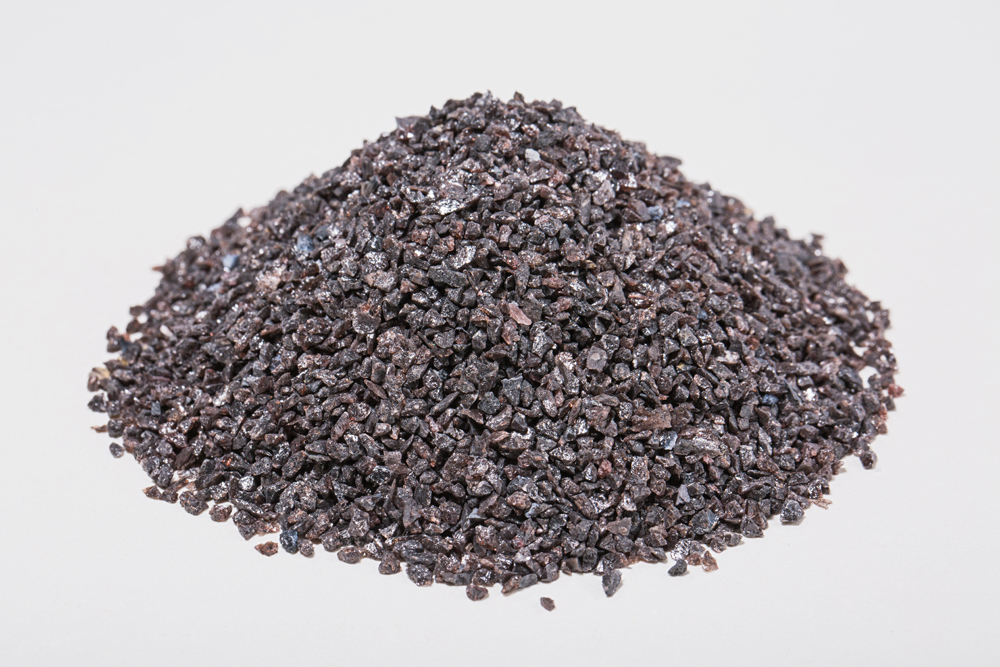
Brown fused alumina is one material, but it is not one product. The same furnace output becomes grinding-wheel grain, sanding-belt grain, blasting media or refractory aggregate, and each job grades, sizes and buys it differently. Buyers who specify by habit — copying the line from a previous purchase order — are the ones who end up with wheels that glaze, belts that shed grain, or a blast profile the coating cannot hold. Selection works better as a three-step decision, in this order: fix the application first, because the application decides the grit system; fix the grit size second, inside that system; and choose the grade last, once you know how much consistency the process actually needs. This guide walks through the four main application families in that order.
The Four Families at a Glance
| Application | Grit system | Common size range | Grade selection | Key watch-out |
|---|---|---|---|---|
| Bonded abrasives — grinding wheels, cutting discs | F grit (FEPA) | F16–F60 working band; wheels at the coarse end, thin cutting discs F36–F60 | 95% for consistency-critical production, 94% mainstream, 90% where cost leads | Toughness and size distribution matter as much as headline alumina content |
| Coated abrasives — belts, flap discs, sheets and rolls | P grit (FEPA) | P24–P240 typical span, coarse for stock removal, fine for finishing | 94% or 95% for metalworking belts and flap discs; 90% for cost-driven lines | Never substitute an F grit of the same number for a P grit |
| Blasting and surface preparation | F grit (FEPA) | F12–F220 depending on target profile: coarse for heavy scale, mid-range for general prep, fine for cosmetic finishes | Favour toughness over headline purity; 94% and 90% cover most work | No fixed recycling count exists; stainless steel needs dedicated media |
| Refractories — castables, ramming mixes, furnace linings | Section sand (mm fractions) plus fine powder | Fractions such as 0–1, 1–3, 3–5 and 5–8 mm, with 200F/320F fines as matrix | 90% is the common value choice; 95% for higher-duty zones | Buy fractions and fines as one gradation set, not as separate bargains |
Bonded Abrasives: Wheels and Cutting Discs
Bonded abrasives run on F grit, and the working band is narrower than most buyers expect. Grinding wheels commonly sit at the coarse end, around F16–F30, while thin resin cutting discs concentrate in F36–F60, matched to disc thickness — the thinner the disc, the finer the grain the bond can hold. Grade choice here is really a consistency choice: the 95% grade, smelted in tilting furnaces, gives the tightest batch-to-batch chemistry and suits large plants with strict incoming inspection, while 94% carries most standard wheel and disc production and 90% serves cost-led lines. Our full F grit series runs F8–F320 under one specification family, and disc makers can go deeper on sizing logic in our guide to grit size for metal cutting discs.
Coated Abrasives: Belts, Flap Discs and Sheets
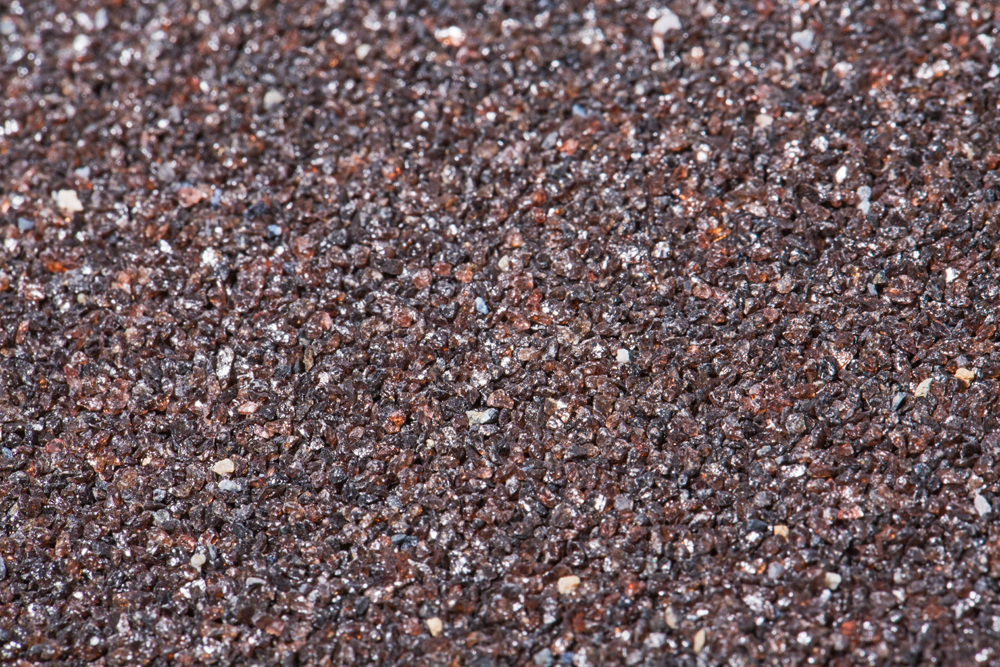
Coated abrasives run on P grit, a separate FEPA grading built for grain that is electrostatically planted onto a backing. Belts and flap discs for metal removal typically work the coarse-to-medium span, while finishing belts, sheets and rolls move into the fine end of the P24–P240 span as the required surface improves. The grade logic mirrors bonded production — 94% and 95% for demanding metalworking lines, 90% where the product competes on price — but grain shape deserves extra attention, because a coated product lives or dies by how the grain anchors in the make coat. Browse the P grit series for the available range, and see our weld-blending guide for how flap-disc and fibre-disc grits are picked for blending welds on fabricated steel.
Blasting and Surface Preparation
Blasting also runs on F grit, but the selection variable is the surface profile, not the tool. Coarse sizes strip mill scale and old coatings and cut deep anchor profiles; mid-range sizes such as F46–F80 cover general preparation before standard paint and epoxy systems; fine sizes prepare cosmetic and thin-film work. Two discipline points matter more than the exact number: brown fused alumina is tough and recyclable, but no honest supplier can quote a fixed number of recycling cycles — the real count depends on your recovery system, air pressure and how fast the grain breaks down in your cabinet or blast room. And stainless steel must be blasted with dedicated media that has never cleaned carbon steel, or embedded iron will rust through the finish. Our dedicated guide works through grit size for stainless steel sandblasting in detail.
Refractories: Section Sand and Fine Powder
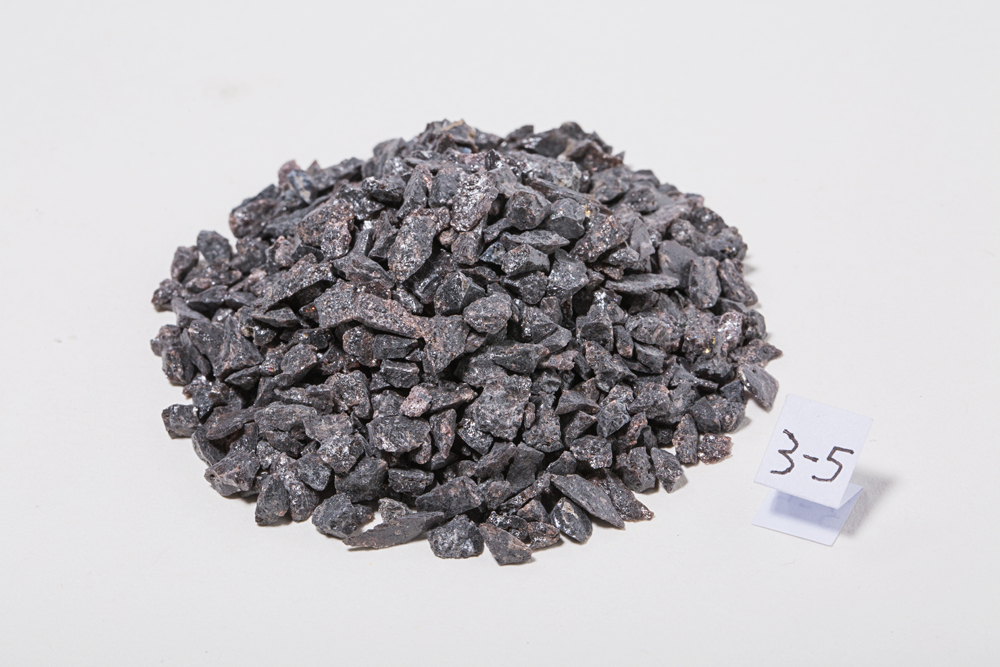
Refractory buyers do not order grit numbers at all. They order section sand — millimetre fractions such as 0–1, 1–3, 3–5 and 5–8 mm that form the aggregate skeleton of a castable or ramming mix — together with fine powder such as 200F and 320F, which fills the matrix between the fractions. The two parts are one gradation design, so changing the fines without rechecking the fractions changes the lining. Grade follows duty: 90% material covers a large share of general refractory work, 95% goes into higher-temperature or higher-wear zones, and the refractory fines themselves can reach 94.5% Al₂O₃ or above. See the refractory grain series and the refractory fine powder series for the fractions and powders we supply as a set.
Three Selection Mistakes We See Repeatedly
Treating F and P numbers as interchangeable. F60 and P60 are graded under different distributions and are not substitutes; a same-number swap changes the cutting behaviour of the finished tool. We explain the two systems side by side in F grit vs P grit.
Rejecting fine grit because the alumina reads about 93%. In the F150–F320 fine range, an Al₂O₃ content around 93% is the normal specification for that size band, not a downgrade or a diluted batch. Judge fine grit against the fine-grit specification, not against the 95% headline of the coarse grades.
Budgeting blasting media on a promised recycling count. Any fixed cycle number quoted without seeing your equipment is a guess. Budget on your own measured breakdown rate from a trial quantity instead.
Check the Size, Then Send the Specification
If your drawing or current supplier quotes sizes in microns or mesh, convert before you compare: our F grit–micron converter translates FEPA grit numbers into approximate particle sizes so both sides are reading the same specification. And if you want to see how the grain is made before you commit, our interactive 3D production tour follows the material from bauxite to finished grit in 16 chapters.
When you are ready to ask for a quotation, send five things: the grade, the grit size or fraction, the quantity, the packing you need, and your destination port. Luoyang Naibao New Materials Co., Ltd. will reply with a factory quotation against that exact specification — and samples first, if you want to prove the selection in your own process before the first full order.