TECHNICAL GUIDE / 2026-10-02
Short answer. Treat each F grit blend as a new wheel formulation. Identify every grain grade and lot, define the blend ratio by a clear basis, hold bond and process settings stable, and test the finished wheel under the manufacturer's approved safety and performance plan. Do not infer wheel strength or life from raw-grain PDS values.
State the reason for blending
A resin cut-off wheel maker may consider more than one F grit to tune cutting behavior, finish or wear. Start with the current approved wheel and name the outcome that is unsatisfactory. A blend should answer a specific technical question, such as whether a change in coarse and fine grain balance affects cut under a fixed workpiece and machine setting. If the request is only to use surplus material, identify that commercial driver separately from a performance hypothesis.
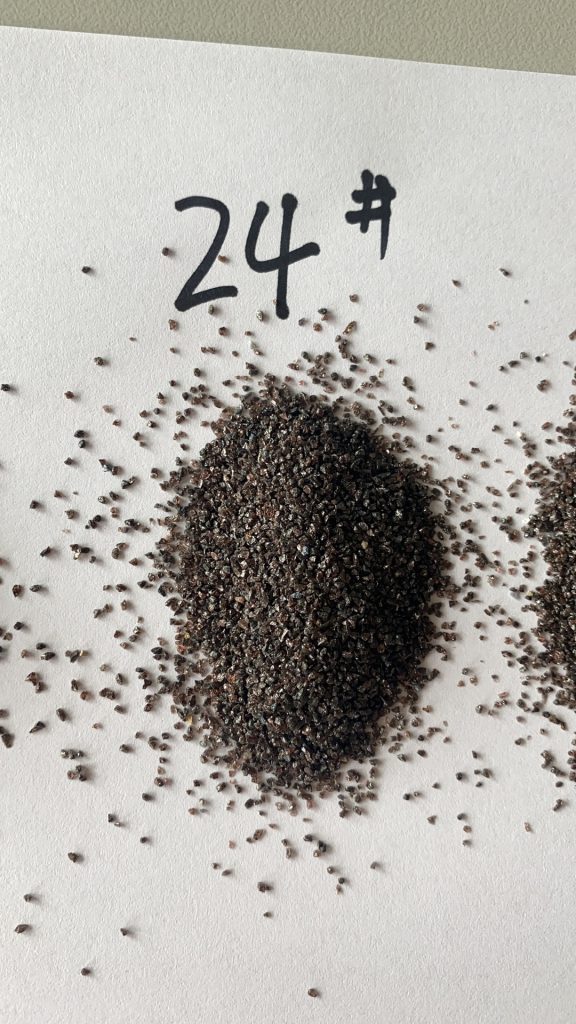
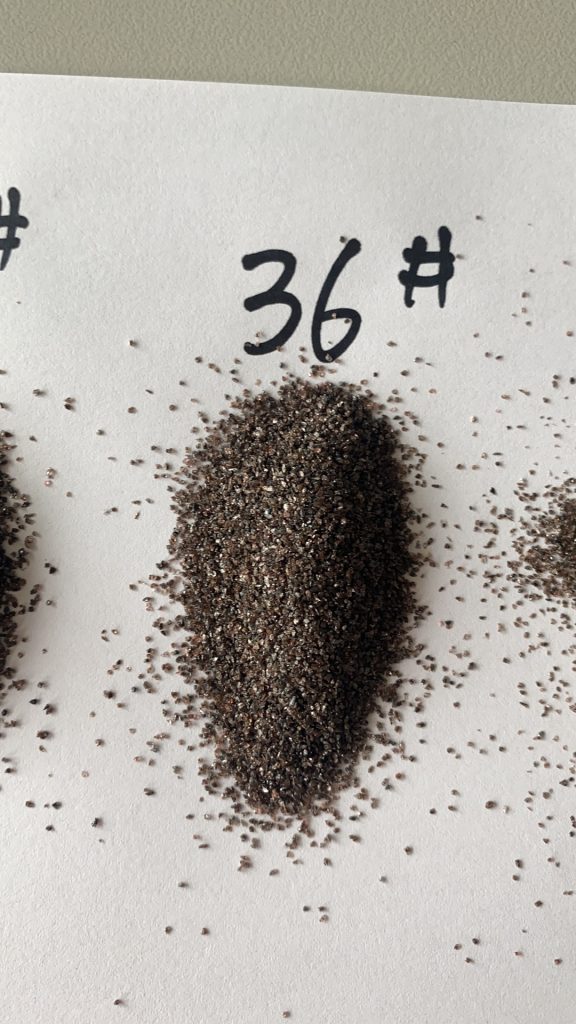
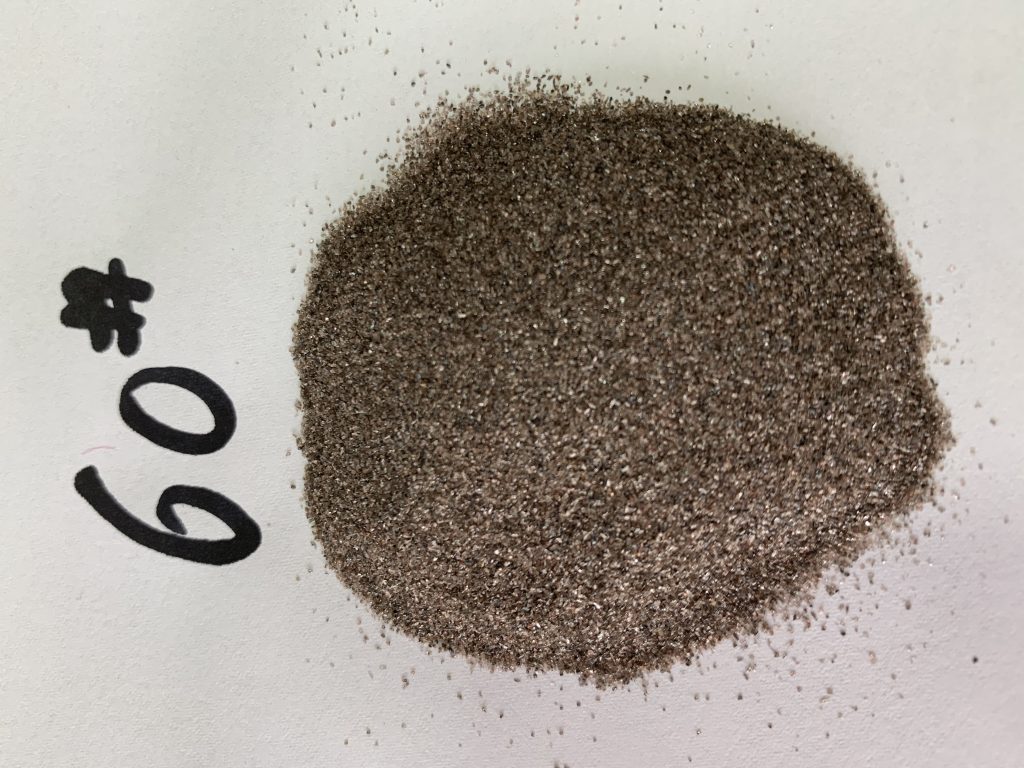
Specify the complete grain identities. A bare number such as 36 does not tell the buyer whether the material follows an F or P series, and a blend name such as medium grit is not a controlled recipe. Write each F designation, supplier product, grade column and lot number. Keep the current single-grade formulation as a baseline. This allows a later review to tell whether the proposed change came from distribution, grain shape, chemistry or an unrelated production adjustment.
Define the ratio and sampling basis
Record whether blend percentages refer to mass of abrasive grain, total dry mix or another basis. A statement such as 60/40 is incomplete without that denominator. Define the weighing tolerance and mixing sequence, then take samples from more than one point in the batch to assess segregation. Coarse and fine fractions may separate during transfer or hopper filling even when the mixer initially appears uniform. A small laboratory cup is not proof of production-scale consistency.
Before forming wheels, compare the intended blend's particle-size distribution with the individual components and the approved recipe. Do not pretend the blend is a single standard F grade. It is a formulation using identified F components. The supplier's PDS describes each supplied grain; the wheel maker owns the blended material and finished-product specification. If a component lot changes during a trial, mark that change explicitly rather than pooling all wheels under one trial label.
Keep resin and process variables visible
Resin wetting, filler addition, mixing order, pressing conditions, curing schedule and wheel geometry can influence the outcome. Hold them constant as far as the trial plan allows. If a different grain shape changes flow or press fill, record it and determine whether the process must be adjusted for a later qualification round. Do not change the bond and blend in the same first comparison without separate controls; an apparent gain or loss would then have several possible causes.
Check the formed and cured wheel with the manufacturer's approved quality and safety tests. Raw grain hardness, chemistry or bulk density cannot certify finished-wheel safe speed or structural integrity. Keep test records tied to each batch of wheels, abrasive lots and production settings. The goal is not to force an attractive single performance number but to see whether results are reproducible across the permitted manufacturing variation.
Compare performance under a controlled cut
Use the same work material, machine, mounting method and operating conditions for baseline and candidate wheels. Record cut rate or time, wheel consumption, burr or finish, heat effects and any operator-relevant handling observation under the approved test protocol. Safety criteria are gates, not trade-offs against cut speed. If the blend changes the cut but also increases variability or fails a safety requirement, the proposed recipe is not qualified.
Repeat enough runs to see whether a difference persists beyond one wheel or one operator. Check whether the actual trial blend remained at its target ratio after mixing and transport. If performance drifts within a batch, examine segregation and process records before blaming one supplied grain component. Preserve retained component samples and the wheel batch record so the manufacturer can revisit the decision when a repeat order is placed.
Selection guidance
For a CHAOYAN inquiry, send the component F grades, blend basis, current wheel type, bond route and intended work material. Request PDS and batch limits for each proposed grain, rather than a generic blend guarantee. The incoming-inspection guide helps define component checks, while the resin-wheel guide frames the application. Confirm commercial supply and lot continuity only after the wheel maker has approved both safety and process performance. A successful test is a documented formulation decision, not a claim that one particular F number is universally best.
Common mistakes
- Using a blend ratio with no mass or recipe basis.
- Calling a two-grade blend a single standard F grade.
- Changing resin, cure and grain ratios in one uncontrolled comparison.
- Treating a grain PDS as proof of finished cut-off wheel safety.
Related technical guidance
Frequently asked questions
Can a supplier provide a finished-wheel performance guarantee from the grain blend alone?
No. The wheel maker must test its own bond, geometry, cure and operating conditions. The supplier can document the supplied grain components and agreed limits.
Why retain samples of both component lots?
They help investigate later variation in the blend or finished wheel. A retained sample without the matching lot, ratio and wheel batch record has limited value.