TECHNICAL GUIDE / 2026-10-02
Short answer. Grain retention is a finished-wheel behavior shaped by abrasive, bond, structure and firing. Qualify a brown fused alumina candidate against an approved control wheel, keeping the recipe and schedule documented. Use the raw grain PDS to identify the supplied material; use finished-wheel tests to decide whether the wheel is safe and fit for its intended grinding duty.
Define what retention means in this wheel
In a vitrified wheel, abrasive grain is held within a fired bond and pore structure. A wheel that releases grain too readily may wear or lose form; one that holds blunt grain too long may cut poorly under its intended conditions. These are process observations, not a single raw-grain property. Define the work material, wheel type, grinding mode, dressing method and desired balance of cut, wear and finish before asking whether a grain is suitable.
The first comparison should use the manufacturer's accepted wheel as a reference. Record its grain source and F designation, bond formulation, structure, forming process and firing schedule. If the new brown fused alumina differs in shape or bulk density, the same fill volume may not represent the same mass or packing state. Keep those differences visible. A product page's hardness or chemistry value alone cannot predict the bond interface after firing.
Check the supplied grain before forming
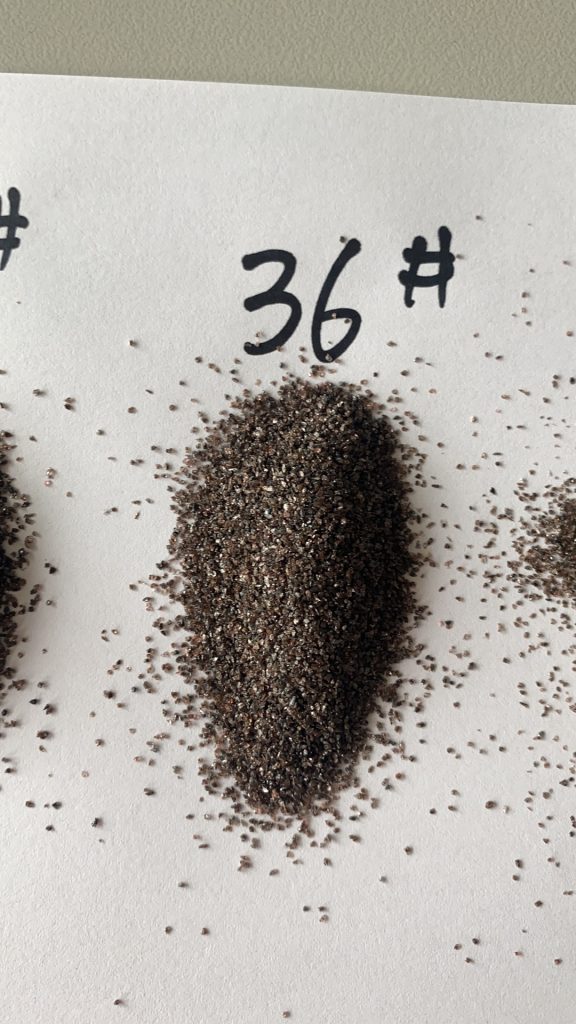
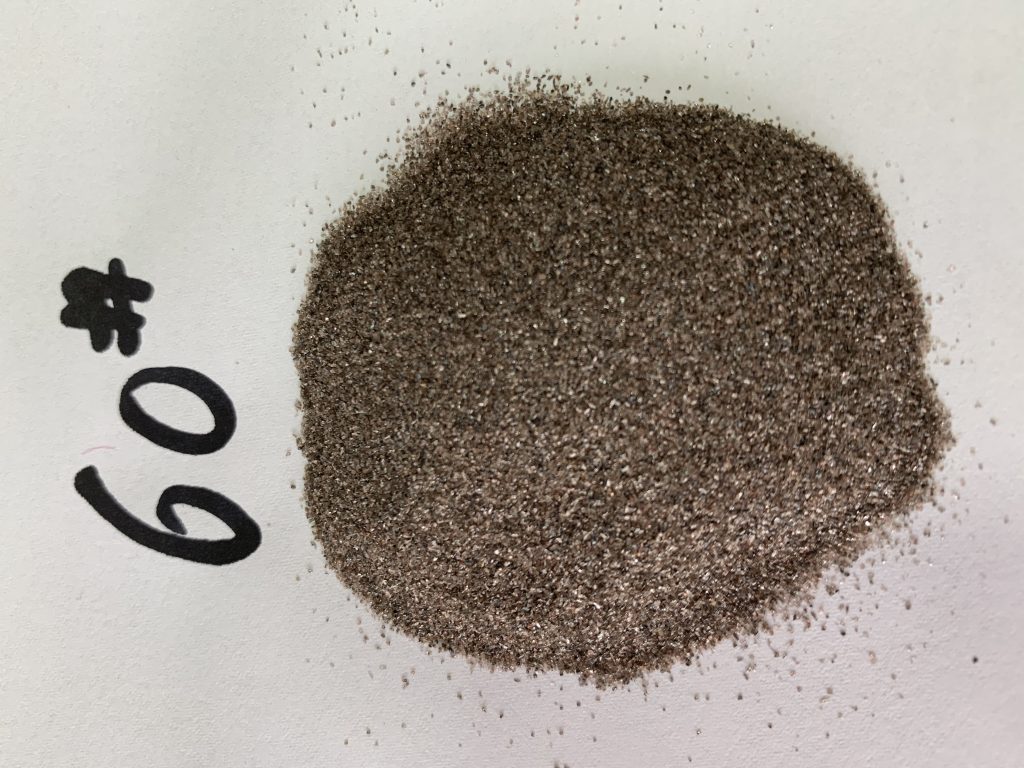
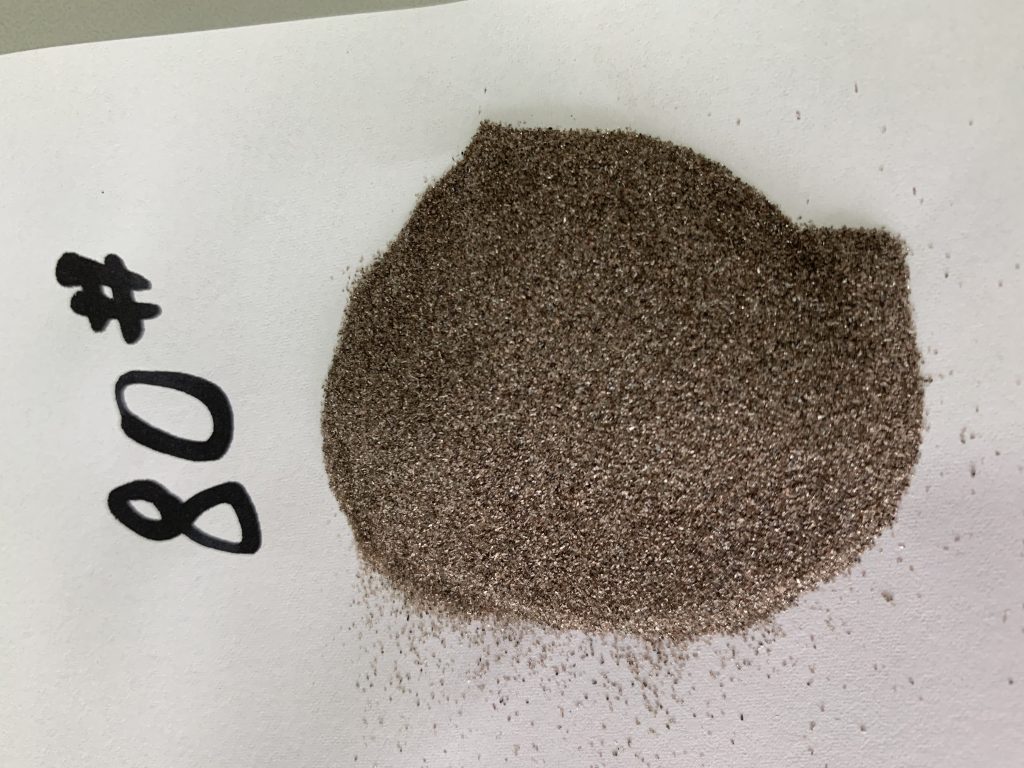
Obtain the exact PDS and agreed purchase specification for the candidate F grade. Verify distribution, chemistry and relevant physical characteristics using the buyer's accepted methods. Take representative samples from the named lot; do not use a convenient scoop from one open bag as the entire shipment. If shape is important to packing or bond contact, specify how it will be assessed. Compare reference, acceptance limits and batch results in separate columns.
Avoid switching several variables at once. A new F grade changes size distribution; a new supplier at the same grade may change shape or minor chemistry within the accepted limits. Those are different experiments. If the wheel maker wants to study both, plan a matrix that can distinguish them. Label each trial wheel batch with its grain lot and recipe revision so the fired and ground results can be traced back to the material actually used.
Observe forming and firing behavior
During mixing and forming, record flow, segregation, press fill, green density or other controls used by the plant. A candidate grain can change handling before any firing effect appears. If production staff adjust water, binder or pressing to make the new material behave like the old one, document the adjustment as a separate trial condition. Silent corrections erase the basis for comparing grain retention later.
After firing, apply the manufacturer's required dimensional, physical and safety inspections. Review the firing schedule and kiln position if results vary within a batch. Grain retention may be influenced by bond maturity and pore structure, so a wheel from a different heat history should not be attributed entirely to the grain. Preserve section observations or other approved evidence where the technical team uses them, but avoid turning one micrograph into a universal explanation without matching performance data.
Test the wheel in its intended use
Dress baseline and candidate wheels under a defined method, then grind the same work material with controlled speed, feed, coolant and test duration. Record cut, wheel wear, form holding, surface finish and any loading or burn within the plant's accepted test plan. Evaluate repeatability across multiple wheels rather than selecting the best individual run. The finished wheel's safety checks must pass independently of performance gains.
If the candidate cuts differently, consider both grain fracture and bond release. A more friable grain may expose new edges while still being held; a bond that sheds intact grains has a different failure mode. Use observed wheel wear, spent-grain inspection where practical, and production records to form a hypothesis. Then test one adjustment at a time. A supplier can help with grain data, but the wheel maker owns the bond and firing qualification.
Selection guidance
Send CHAOYAN the exact F grade, present working grain, relevant chemistry and distribution limits, wheel bond route and proposed trial quantity. Request a matching PDS and batch information. The vitrified-wheel selection guide addresses grade choice; this retention trial focuses on the wheel response after forming and firing. Approve a candidate only when material acceptance, manufacturing stability, safety and grinding performance have been reviewed together. A favorable raw-grain property is useful evidence, but never a substitute for the finished-wheel decision.
Common mistakes
- Calling bulk density a direct measure of grain retention in a fired wheel.
- Changing the firing schedule and grain without keeping separate trial labels.
- Selecting a single high-performing wheel and ignoring within-batch variation.
- Treating raw-grain compliance as finished-wheel safety approval.
Related technical guidance
Frequently asked questions
Does a tougher grain always stay longer in a vitrified bond?
No universal rule follows. Bond design, firing, grain shape and grinding load all affect retention and useful cutting behavior. Run the defined wheel trial.
Can wheel wear alone diagnose a grain problem?
No. Review bond behavior, dressing, work material, coolant and production variation alongside the supplied grain record.