TECHNICAL GUIDE / 2026-10-02
Short answer. Agree the coating system's profile requirement and measurement method before blasting. Measure representative areas after cleaning, record the abrasive grade and equipment settings, and treat visual appearance as supporting evidence. A grit number or reference micron value cannot prove that a finished surface meets its anchor-profile requirement.
Define the coating question first
An anchor profile is a surface result, not a property printed on an abrasive bag. The coating system, substrate and service requirement determine the acceptable profile and inspection method. Ask the coating technical owner for the approved range, the applicable surface preparation document, and the number and locations of readings. Without that instruction, a blasting operator may create a surface that looks clean but is too shallow or too aggressive for the planned coating. The choice of brown fused alumina F grit should follow this target.
The surface may also need a defined cleanliness level and limits on dust or other contamination. Keep these as separate acceptance checks. A satisfactory profile does not erase a salt or residue problem, and a clean-looking surface does not establish profile depth. If a buyer is evaluating a new abrasive supplier, record the current approved media and its actual surface result before choosing a candidate. That baseline turns a vague comparison into a repeatable trial.
Choose a method that matches the specification
Different jobs use comparators, replica tape, stylus instruments or other agreed techniques. This article does not substitute one method for another. Select the method named in the coating or project specification and train the person taking readings. Note the instrument identification, condition and calibration or verification status under the site's procedure. A number without a method cannot be compared reliably with an acceptance range produced using another method.
Plan measurements across representative geometry: broad faces, edges, corners, weld areas or recessed zones where blasting exposure can differ. Do not select only the most favorable flat patch. If the workpiece has several surface types or an old coating, record those conditions so the test is not misread as one uniform material. A small trial panel is useful for screening but should not replace production inspection on complex parts.
Control abrasive and equipment variables
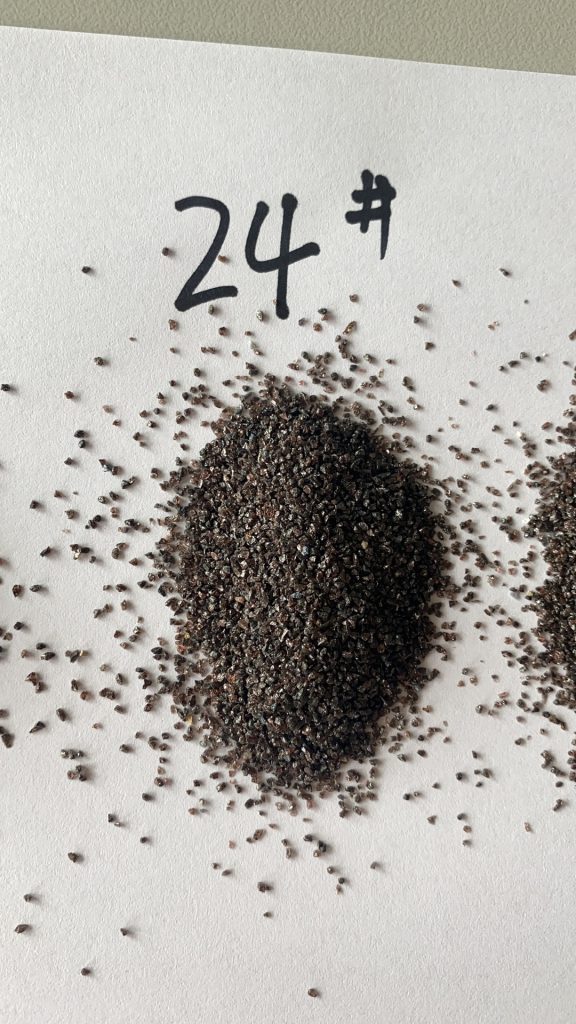
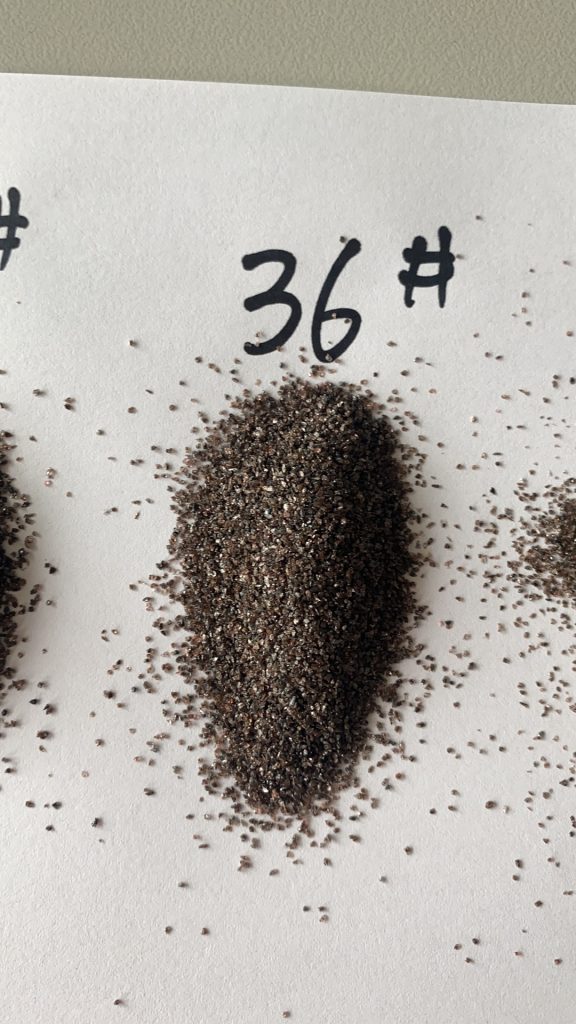
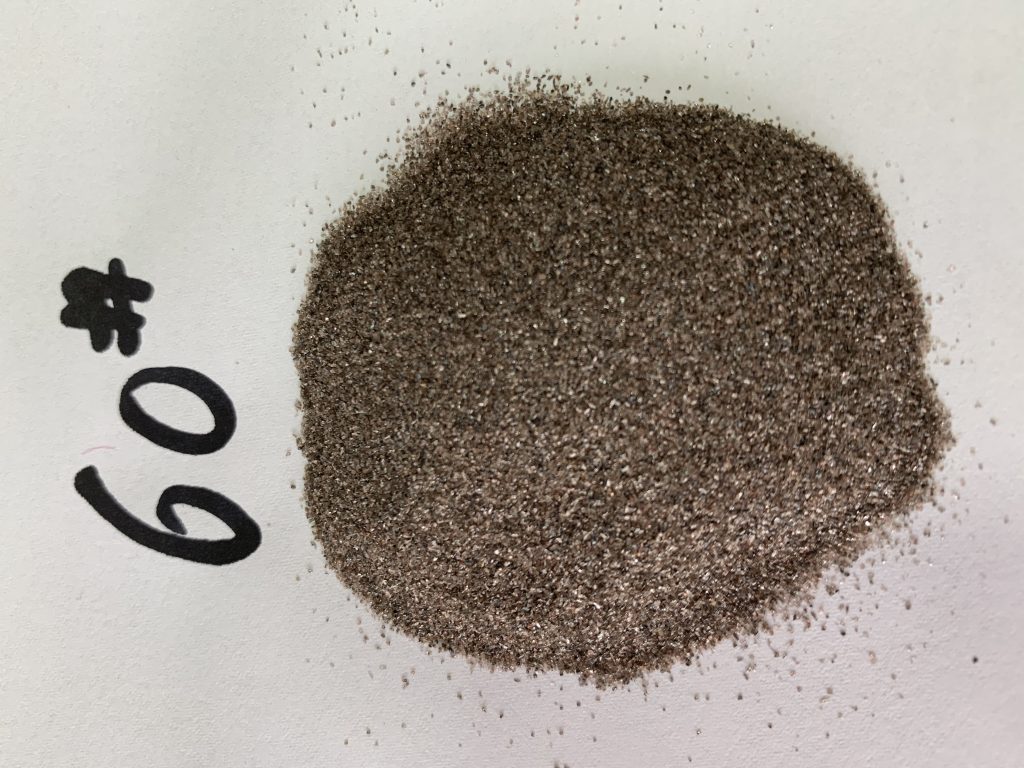
Brown fused alumina F24, F36 and F60 are different candidate grades, but none guarantees a particular profile. Particle distribution, grain shape, blast pressure, nozzle wear, stand-off, angle, dwell time and the substrate all influence the result. Record the exact F prefix and grade, product lot, whether the media is fresh or reclaimed, and any mixing ratio. The F grit to micron tool can help explain a reference size, but its values are not surface-profile predictions.
When testing a different grade, keep pressure, nozzle and application technique as stable as possible. If a process constraint forces a change, document it explicitly. A difference in profile after changing both grade and pressure cannot be assigned to grain size alone. Sample the recovered media when reuse is part of the process; the circulating population may contain fines and contamination that differ from the newly supplied material.
Record the finished surface and the decision
Take profile readings after the required post-blast cleaning and at the specified time. Record each location and value rather than only an average; localized highs or lows can matter to coating performance. Capture photographs for context, but attach the numerical reading, method, operator and instrument to the same job record. If the profile is outside the accepted band, hold the part and follow the project correction procedure. Do not keep blasting indefinitely without considering substrate loss or geometry.
Compare media candidates using the proportion of areas passing, consistency between operators, media consumption and any rework. A candidate that reaches the range only under an impractical setting may not be a useful production choice. Preserve the relevant abrasive PDS and lot reference with the coating inspection record so a later review can distinguish a media issue from an equipment or coating-system change.
Selection guidance
For an inquiry, send CHAOYAN the substrate, coating system, profile method and target band, current blast pressure and nozzle, reuse plan, and present F grade if known. Request exact product documentation for a small trial list. Use the surface preparation guide to frame the process and the pressure/nozzle guide to avoid changing unrelated variables at once. The successful result is a measured, reproducible surface under the buyer's approved inspection plan, not a particular grit number in isolation.
Common mistakes
- Treating the supplier's grit-to-micron reference as an anchor-profile reading.
- Measuring only the easiest flat area of a complex part.
- Reporting one average while hiding out-of-range local readings.
- Changing pressure, nozzle and abrasive together without recording each change.
Related technical guidance
Frequently asked questions
Does a coarser F grit always produce an acceptable coating profile?
No. The substrate, equipment and coating target control the decision. A coarser grade may create an unsuitable surface or excessive material removal in some conditions; measure the result under the agreed method.
Can a photograph replace profile measurements?
No. Photographs help document appearance and location but cannot reliably express the specified profile value. Keep instrument readings and the method with the image record.