TECHNICAL GUIDE / 2026-11-08
Writing a Grit Specification That Works Across FEPA, JIS and ANSI
A buyer emails three suppliers for "36 grit" and receives three different grains. One is coarse and blocky, one runs fine, one is a coated-abrasive grain that was never meant for a grinding wheel. The error was in the order: a bare number is not a specification. FEPA, JIS and ANSI all use numbers that look alike, and none of them means the same thing as the others. A specification that works across all three names the system, the grade as that system writes it, and the acceptance limits that turn a label into a measurable delivery.
Three Systems, Three Histories
FEPA is the European system. It splits grain into F grit for bonded abrasives (wheels, cutting discs) and P grit for coated abrasives (belts, paper). FEPA 42-1 covers macrogrit F grades, FEPA 42-2 the microgrit range. The letter is part of the grade: F36 and P36 are different products.
JIS is the Japanese system, built around JIS R 6001. Buyers write grit sizes with a hash mark, such as #36, and rely on a written specification sheet and batch-to-batch consistency. A JIS number is a grade inside the JIS sieving practice, not a translation of a FEPA grade.
ANSI is the American system, built around ANSI B74.12. US importers commonly work in mesh-based grit numbers, paired with a sieve analysis and a safety data sheet. The number only has meaning inside its own system.
A number without a system is an unfinished sentence: "36" means nothing until it becomes "F36 under FEPA 42-1", "#36 under JIS R 6001", or "36 under ANSI B74.12" — and even then, the work is only half done.
The Three Traps in Cross-System Ordering
Trap one: the same number, different size. A buyer used to F36 assumes a "#36" or "36 mesh" offer is the same grain under a different label. It is not. Each system defines its grades with its own sieves and distribution rules, so the same number can sit over a different spread of particle sizes. In coarse blasting the difference may pass unnoticed; on a grinding line it changes wheel behaviour and finish. As our own FEPA F-grit size chart notes, a macrogrit grade is a range of mean diameters, not one exact size, and an acceptance document must state which distribution limits apply.
Trap two: the converted micron. Online converters are useful for orientation and dangerous as an ordering tool. A converter returns a single micron value — a mean diameter — which a buyer pastes into the purchase order as if it were the specification. A mean says nothing about how much oversize or undersize material is allowed. Conversion tables are approximations between systems; they do not define acceptance. Use the F-grit micron converter for orientation — then write the order in one system's language, with limits, not converted microns.
Trap three: the dropped letter. F versus P is the easiest mistake to make and one of the most expensive: a coated-abrasive plant that drops the P and orders "36" may receive bonded-abrasive F grain, and a wheel maker that drops the F may receive P grain graded for a belt. Keep the letter in every document — quotation, sample label, purchase order and delivery note — as our guide to F and P designations in purchase documents explains.
Five Lines Every Grit Specification Needs
A specification that survives a cross-system order has five elements.
1. The standard, with its edition. Write "FEPA 42-1", not "FEPA": naming the edition fixes the test basis both sides work to. The same applies to JIS R 6001.
2. The grade, exactly as written in that standard. "F46" for a FEPA bonded-abrasive order, "P46" for coated, "#46" for a JIS order. Never translate the grade into another system's number inside the order — translation belongs in a comparison note, not in the ordering line.
3. The distribution limits and the test method. State the oversize and undersize limits, the sieving or test method that verifies them, and where those limits live — usually the agreed product data sheet. This turns a grade label into something receiving inspection can check. Without limits in the order, a delivery cannot fail them — and that is how wrong grain gets accepted.
4. The chemistry grade, kept separate from size. Size and chemistry are independent variables and belong on separate lines: the A-grade specification for F46 on our product pages lists Al2O3 at 95.00–97.50% alongside its magnetic content limits. A buyer who writes "F46" and assumes a chemistry grade has ordered half a specification.
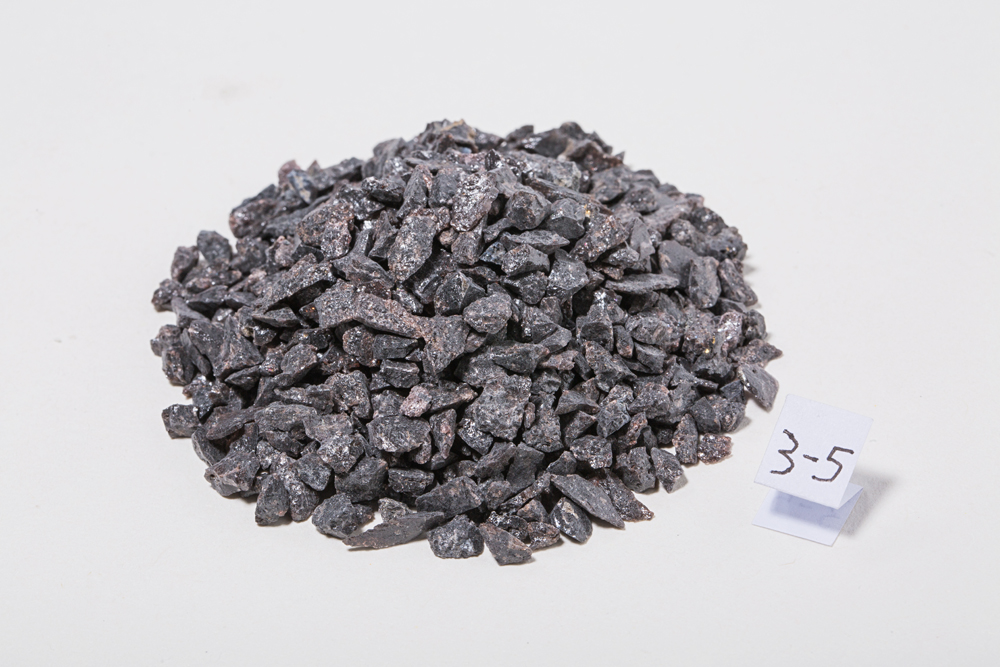
5. Sample approval and batch acceptance. Require a labelled sample approved in your own process before bulk shipment, and a batch test report with the delivery, checked line by line against the agreed sheet.
A Worked Example: Ordering F46 for a Grinding Wheel
A wheel maker switching supplier writes the order line like this:
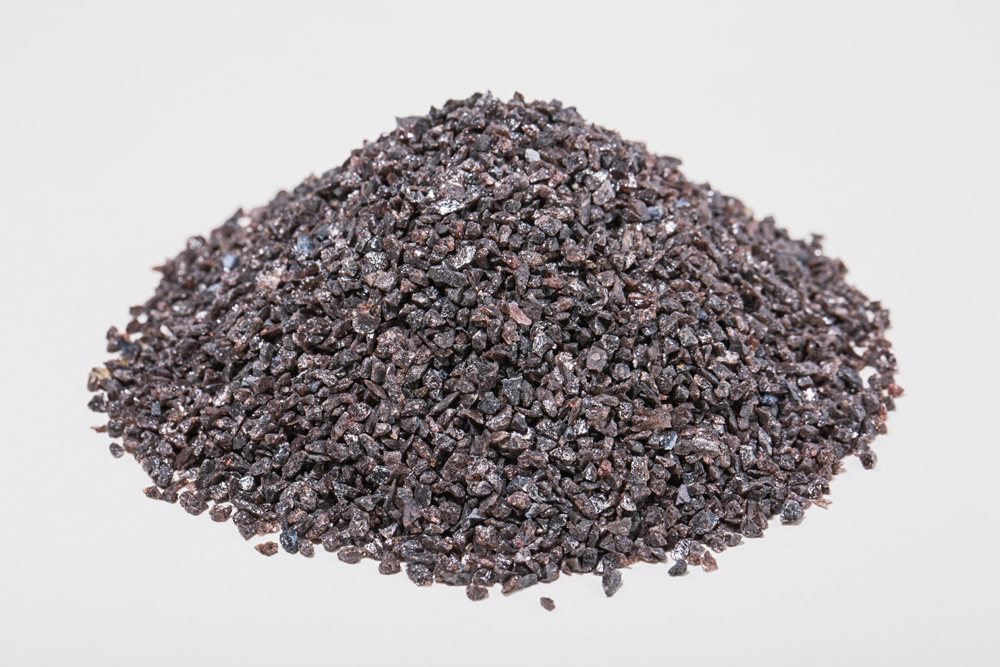
Brown fused alumina, F46, FEPA 42-1. Particle-size distribution and chemistry per the agreed specification sheet. Sample approved before shipment. Batch test report with delivery.
That one paragraph replaces three rounds of clarification — which system governs, which letter applies, where the limits are written, and what happens before and after shipment. The supplier should confirm the same list back in writing.
When the Supplier Quotes in Another System
Sooner or later a good supplier will answer in a system you do not use. That is normal in international trade — a reason to slow down for one step, not to walk away. Ask for the basis of their conversion: which table or standard edition they used, and what distribution limits sit behind the grade they quoted. Then request a labelled sample in their designation and run it in your own process, side by side with your current grain, before any bulk order. If it performs, record both designations as a tested equivalence — your grade, their grade, the standard each belongs to, and the trial that proved them interchangeable. That record beats any conversion chart: it is evidence from your own line, not a lookup.
Never convert the number yourself and write the converted grade into the order. A grit problem found after a container is unloaded is the most expensive way to learn that two systems disagreed.
Before You Send the Purchase Order
Do not send the order until every line below has an answer:
- Is the standard named, with its edition?
- Is the letter kept — F or P — in every document?
- Are the distribution limits and test method stated, with the sheet agreed?
- Is the chemistry grade on its own line?
- Has a labelled sample been approved in your own process?
- Is a batch test report required with the delivery?
- Are quantity, packing and destination port stated?
Luoyang Naibao New Materials Co., Ltd. supplies the brown fused alumina F-grit series from F8 to F320, with a product data sheet for each grade. When you enquire, send the grade and standard, the application, the quantity, the packing and the destination port — with those five items, a quotation can be prepared against the specification you intend to buy to.