TECHNICAL GUIDE / 2026-11-25
India: Why 90% Grade Wins in Indian Refractories
India is one of the largest artificial corundum markets in the world, and it buys in a way that surprises first-time suppliers: the grade most Indian refractory buyers ask for first is not the highest one. It is the 90% grade. According to IndexBox, India consumed about 280,000 tons of artificial corundum in 2024, making it the world's third-largest market with a 9.1% share of global consumption, and produced about 265,000 tons, making it the world's second-largest producer. Even so, India imported 21,769 tons in 2024, worth $19.78 million, and China supplied 20,357 of those tons — roughly 90% of import value, according to IndexBox. The average import price stood at about $909 per ton in 2024. India also recorded the fastest import growth in Asia over 2013–2024, at 28.1% a year by volume.
Source: IndexBox, "India – Artificial Corundum – Market Analysis" (https://www.indexbox.io/store/india-artificial-corundum-market-analysis-forecast-size-trends-and-insights/) and "Asia – Artificial Corundum – Market Analysis" (https://www.indexbox.io/blog/artificial-corundum-asia-market-overview-2024-3/); UN Comtrade via WITS, India imports of artificial corundum HS 281810, 2024 (https://wits.worldbank.org/trade/comtrade/en/country/IND/year/2024/tradeflow/Imports/partner/ALL/product/281810).
The reason is not that Indian buyers accept lower quality. They match the grade to the job, and in much of refractory work the job does not need the top of the range.
What the 90% grade actually is
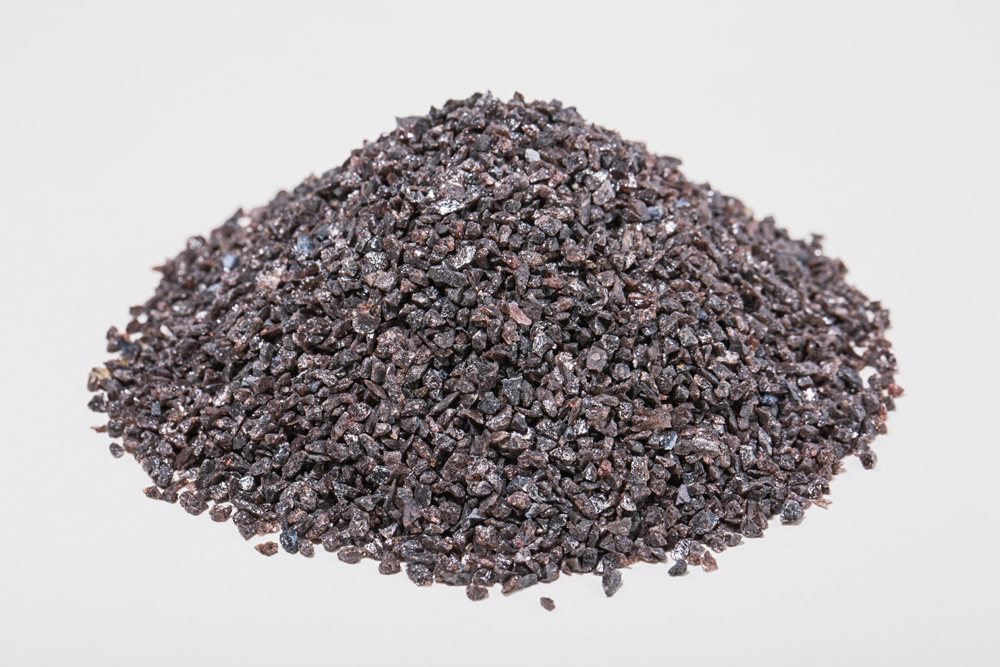
Brown fused alumina is graded by its alumina content, and the three grades refractory buyers meet most often are 95%, 94% and 90%. The 90% grade carries about 90% Al2O3, with the balance made up mainly of silica, iron oxide and titania. Those minor oxides are what set the grade's limits: they lower the refractoriness of the grain and make it less suited to the hottest, most aggressive zones of a lining. In milder service, the same oxides are simply part of a working aggregate that does its job at a lower cost.
The grade number is not a quality score, and a higher number is not automatically a better purchase: the right grade is the one whose chemistry fits the temperature, slag contact and load of the zone it will serve. For a fuller walkthrough of how the three grades divide across service zones, see Choosing a Grade for Refractory Castables: 95%, 94% or 90% in Service.
Where 90% wins in Indian refractory practice
India's refractory demand is driven by steel, cement, glass, foundry and non-ferrous plants, and much of it sits where the lining is not pushed to its limit. That is where 90% grade earns its place:
- Backup and safety linings. Behind a high-grade working lining, the backup layer sees lower temperatures and no direct slag or metal contact. Its job is insulation and structural support, and 90% grain does it at a meaningfully lower cost per tonne than 95% grain in the same size fraction.
- Lower-temperature equipment. Many kilns, furnaces and ladles have zones that run well below peak temperature. Where the castable or brick design allows it, 90% grain is the economical choice for those zones.
- High-volume castables and bricks. When a plant relines frequently or pours large volumes, aggregate cost dominates the material bill. Using 90% where the design supports it keeps the per-campaign cost down without changing the working face.
- Precast shapes and ramming mixes. For standard shapes and mixes in moderate service, the binder system, matrix fines and installation practice often carry more of the performance than aggregate chemistry does.
In each case the buyer is buying exactly the chemistry the zone requires, and spending the saving where it matters — on premium grades at the hot face and slag line. That zoning logic is the heart of the 90% grade's appeal in India, where refractory budgets are tight and plants are relined on short cycles.
The cost logic: per tonne versus per campaign
Per tonne, 90% grade will always look attractive and 95% will always look expensive. Per campaign, the arithmetic is what matters. Aggregate is only one cost line inside a relining that also involves labour, downtime and lost production. If a lining fails early, the saving on aggregate is wiped out many times over. If it survives its full campaign, the premium paid for grade the zone never needed is money spent for nothing.
The rule experienced Indian buyers follow is to spend grade where failure is expensive and save it where the design allows: premium grades at the hot face and contact zones, 90% grade doing volume work behind them. A supplier that understands this zoning will not push 95% into a backup layer, and will not offer 90% for a slag line to win an order. Both errors cost the buyer more than the invoice difference.
Grading matters as much as chemistry
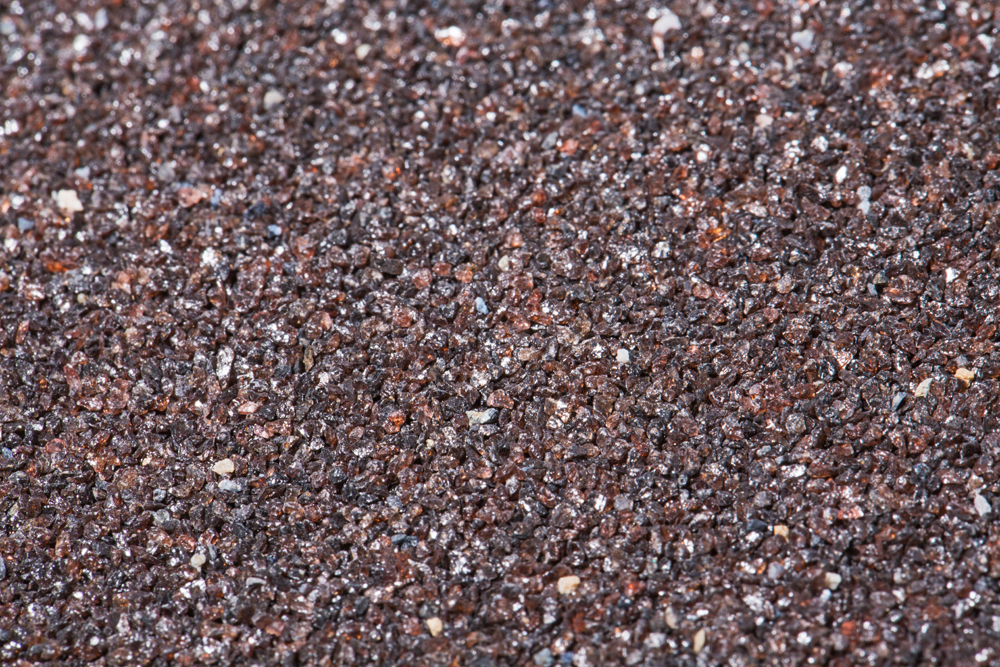
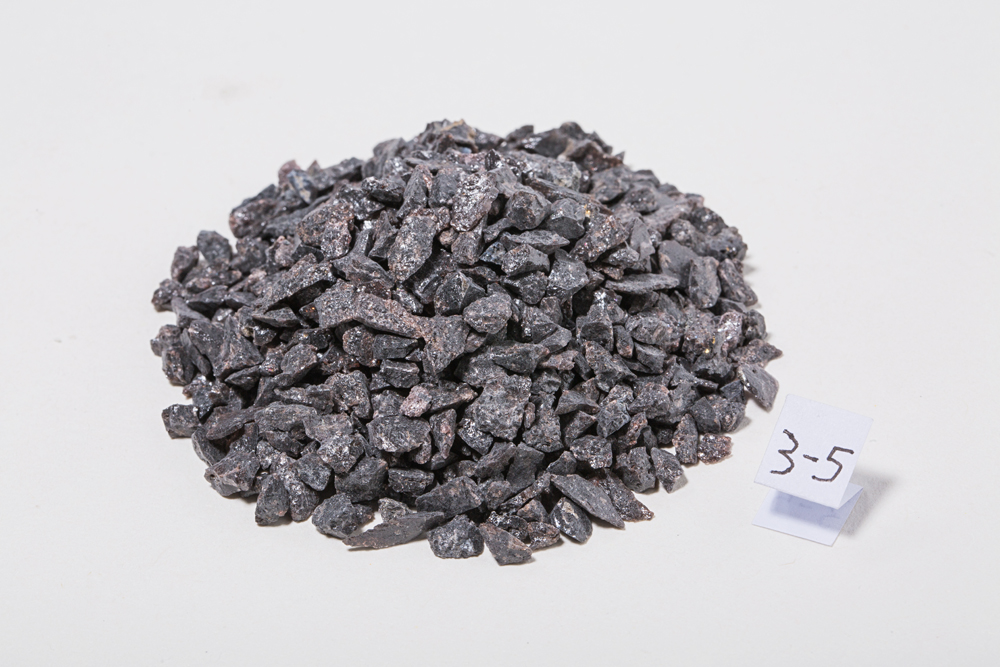
In Indian refractory buying, the grade number gets the attention, but size grading decides how the material performs in the mix. Refractory grain is bought by millimetre size — 0–1, 1–3, 3–5, 5–8 mm segment sand — with fine powder such as 200F for the castable matrix. Close, consistent grading gives a dense, workable mix; loose grading gives segregation, extra water demand and weak spots, whatever the grade number says.
Two points deserve attention in every Indian order. First, confirm the size fractions and their tolerances in the agreed specification, not just the grade — the same 90% grain in a different grading is a different material in the mixer. Second, ask for a batch test report for each lot and read it before the material goes into production: chemistry, size distribution and magnetic content should be checked lot by lot, because two lots with the same certificate can still behave differently. Our guide to reading a batch test report explains what to check line by line.
What to confirm before ordering from China
Whether buying through a trading house or direct from the producer, five confirmations prevent most problems:
- Grade and sizes in writing. State the grade band (90%), the size fractions, and the test items in the specification sheet, and treat that sheet as the acceptance document.
- A batch test report per lot. Chemistry and size distribution for the actual lot shipped, not a generic product data sheet.
- Packing for Indian conditions. Standard export packing is 25 kg bags, with 40 bags to a one-tonne bag or palletised for container loading; confirm bag and pallet details against monsoon-season storage and port handling at the Indian end.
- A trial tonne first. One tonne through the buyer's own mixer and kiln answers more questions than any data sheet, and it is the normal first step before a container order.
- A second source on standby. With China supplying about 90% of India's artificial corundum imports, most Indian buyers already run a second qualified supplier in parallel, so a single plant shutdown never stops their line.
Buying into India
India's refractory market rewards suppliers that match the grade to the service zone, prove consistency lot by lot, and quote on the full specification rather than the grade number alone. The 90% grade wins in India because it is the right answer for a large part of real refractory service — not the cheapest line on a quotation, but the grade the job actually needs.
Luoyang Naibao New Materials Co., Ltd. supplies refractory grain in 0–1 to 5–8 mm segment sand and fine powder, including brown fused alumina for refractory castables, with batch test reports for each lot and packing confirmed per order. For an accurate quotation, share the grade, size fractions, quantity, packing and destination port — see our India market page for the broader picture of buying into this market.