TECHNICAL GUIDE / 2026-11-13
Same Certificate, Different Performance: Why Two F46 Lots Behave Differently
A grinding wheel maker runs the same recipe, the same bond, the same pressing cycle — and changes only the lot of brown fused alumina F46. The first lot dresses cleanly and cuts the way the last order did. The second lot, bought to the same specification and delivered with a certificate that reads the same, loads faster and wears the wheel differently, leaving the operator adjusting a process that was settled months ago.
Nothing was mislabelled. The two lots really do meet the same specification, and they really do behave differently. That is not a contradiction. It is what happens when a buyer treats the certificate as the whole material, when it is only a summary of it.
What a Certificate Actually Checks
A batch test report for F46 grain answers a short list of questions. It confirms the chemistry against the grade: for A grade, alumina (Al2O3) in the range 95.00–97.50%, with the minor oxides — silica, ferric oxide, titanium dioxide — inside their limits. It confirms the sieve analysis: the grain passes the specified sieves within the allowed oversize and undersize. It confirms the magnetic content is below its limit (0.0300% for one grade column, 0.0580% for the other on our F46 specification). Our guide to reading a batch test report walks through each of these lines.
Everything on that list matters. None of it is the whole story. A certificate is a pass-or-fail check against a specification written years ago, and the specification measures what is easy to measure in a laboratory. The properties that decide how a grain cuts, how it holds in a bond, and how long a wheel lasts are only partly on that list. Two lots can clear every line of the same certificate and still differ in exactly the properties it never asks about.
Particle Shape: The Variable the Certificate Never Mentions
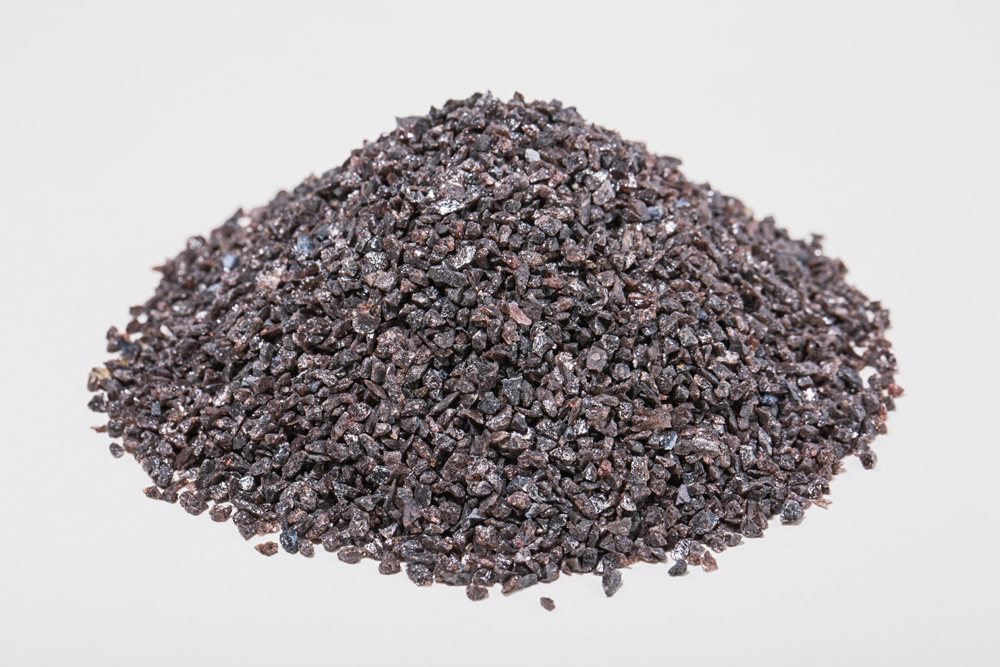
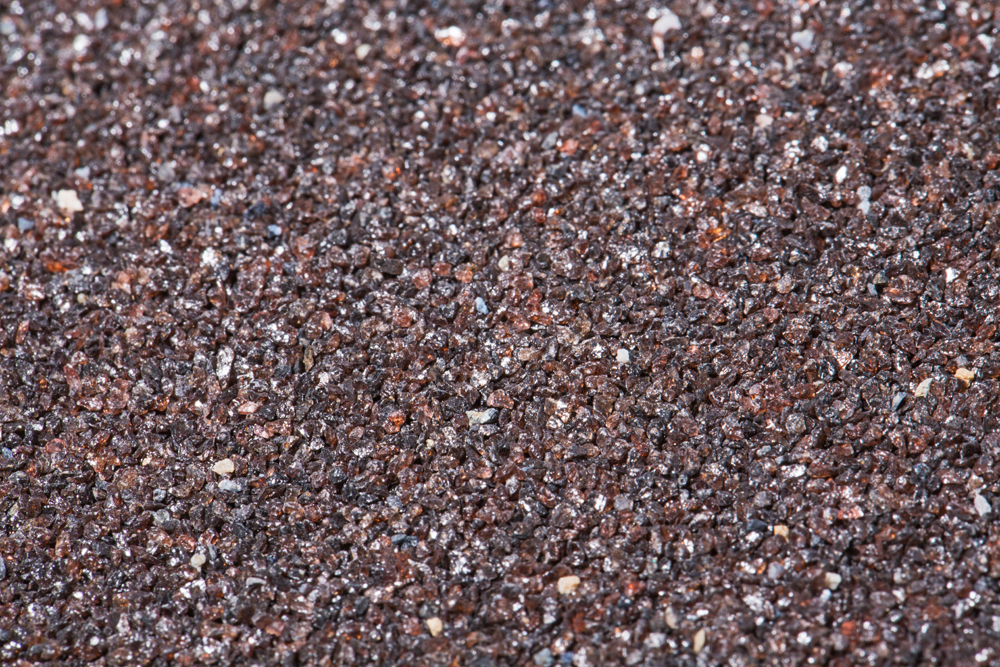
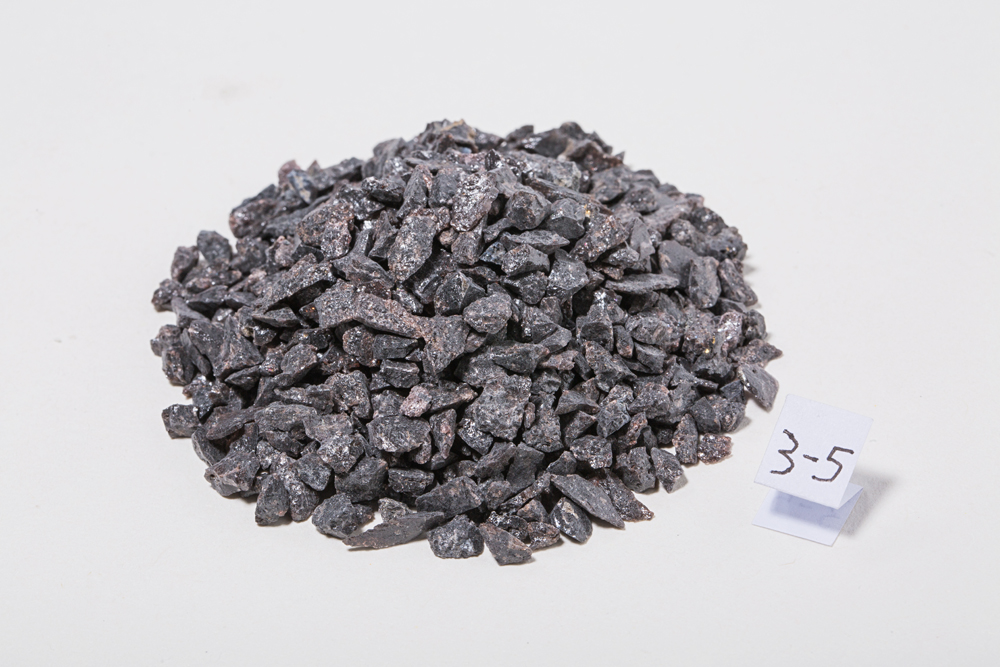
The first of those properties is particle shape. Brown fused alumina grain is crushed from solid blocks, and crushing produces a mix: sharp angular fragments, blocky near-cubic grains, and elongated splinters. The proportions of that mix change from lot to lot, with the feed material, the crushing setup, and how the grain was screened.
Shape changes behaviour in ways a sieve cannot see. An angular grain presents fresh cutting edges; a blocky grain is stronger but cuts less aggressively; an elongated grain can snap under load and shed fines into the bond. In a resin wheel, shape also decides how firmly each grain sits in the bond — and that grip decides whether the grain cuts until it is worn or pulls out early and shortens wheel life.
Two lots of the same F46, both inside the sieve band, can therefore dress differently and wear at different rates. The certificate says nothing about shape because the standard sieve test cannot measure it. Our article on particle shape evaluation explains how buyers can look at shape directly, under a microscope or with a simple spread-and-photograph check, instead of guessing from the certificate.
Size Distribution Inside the F46 Band
The second property is the size distribution inside the grade band. "F46" names a band, not a single size. Within that band, one lot can sit near the coarse end and another near the fine end, and both still pass the same sieve check. A lot with more coarse grains cuts faster and leaves a rougher finish; a lot with more fines loads the wheel faster and changes the dressing interval. The certificate records pass or fail at the band edges; it does not tell you where inside the band the bulk of the grain sits.
A full sieve analysis does. It breaks the lot into fractions — oversize, coarse grain, basic grain, combined grain, fine grain — and the balance between them is the fingerprint of that lot. For reference, the sample values published on our F46 product page show one such breakdown: oversize 0, coarse grain 15.2, basic grain 51.3, combined grain 82.6 and fine grain 2.7. Those are sample values from a reference lot, not guaranteed limits — but they show what the numbers look like, and what to ask for.
Chemistry Is a Range, Not a Point
The third property is chemistry itself — not whether it passes, but where it sits inside the allowed range. A grade allows alumina between 95.00% and 97.50%. A lot at the top of that range and a lot at the bottom both pass, and both carry the same grade name. The same is true of the minor oxides: the reference sample on our F46 page reads 95.40% alumina, 1.06% silica, 0.14% ferric oxide and 2.81% titanium dioxide. Small shifts in those minor oxides change the toughness of the crystal and how the grain fractures under load — a grain that fractures cleanly exposes new edges, while one that crushes to dust does not.
None of this makes either lot wrong. It makes the certificate a coarse filter: it catches material that is out of specification, but it cannot rank two in-specification lots by performance. Expecting it to do so is the mistake, not the material.
What to Do Before the Next Order
If two lots have already behaved differently in your plant, the fix is not a complaint about the certificate. It is a better specification and a better receiving routine:
- Ask for the full sieve analysis, not just the pass. Compare the fraction breakdown lot to lot. A shift in the coarse or fine fraction explains most of the difference in cutting behaviour.
- Look at the grain. A quick microscope check of particle shape on the new lot against the retained sample of the good lot shows in minutes what a certificate never will.
- Read the chemistry as a position, not a verdict. Note where alumina and the minor oxides sit inside their ranges, and keep a record lot by lot. Patterns appear over five or six lots that one certificate cannot show.
- Run a wheel trial before committing the lot to production. One wheel, one dressing cycle, measured against the previous lot on the same machine, settles the question faster than any document.
- Write the distribution into the purchase order. If your process needs the coarse fraction held tight, say so in the order — a sieve band alone does not hold it. Our F46 technical data sheet sets out the published composition and properties to build that order around.
A certificate proves the material is what it claims to be. Performance is decided by the properties around the certificate — shape, distribution, and where the chemistry sits inside its range. Buyers who check those three things stop being surprised by the next lot.
Qualifying a new lot now? Send us the grade and grit size, quantity, packing and destination port, and Luoyang Naibao New Materials Co., Ltd. will quote against the specification you need — with the full sieve analysis and batch test report for the lot you actually receive. The same F grit series covers the full F range when your next trial needs a coarser or finer grade beside the F46.